
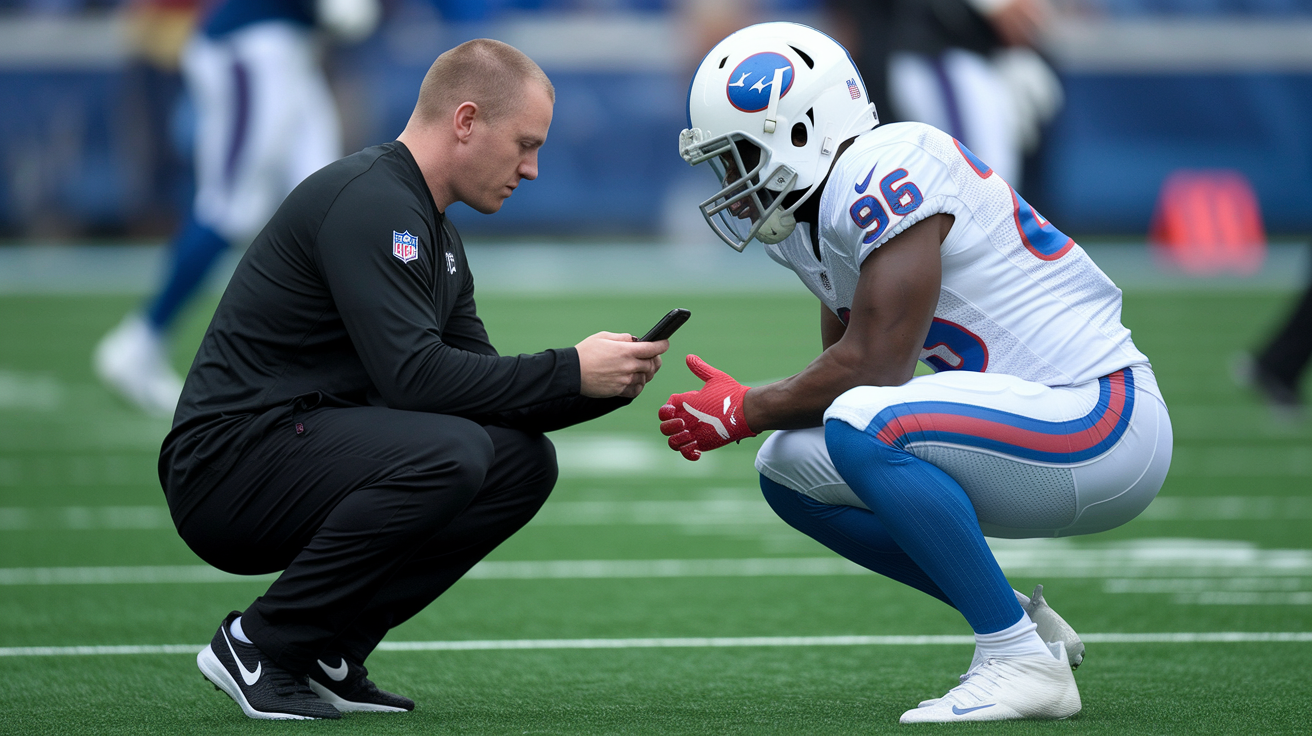

Think “limited” on the injury report means a player is doubtful to suit up? Not usually.
Limited means the player practiced in a reduced role — some reps, not all — somewhere between Full and Did Not Practice.
What matters is the week’s pattern: the status label (Probable, Questionable, Doubtful), Friday reps, and whether he took those “golden” snaps with starters.
This piece shows you how to read limited tags fast, spot the signals that predict game‑day availability, and use them for fantasy and betting choices.
Immediate Meaning of a Limited Practice Designation on an NFL Injury Report

Limited practice means the player showed up and did some stuff, but not everything. He’s somewhere between Full (every rep, no restrictions) and Did Not Practice (zero on‑field work). That’s it.
The NFL made teams use these three buckets so everyone’s speaking the same language. Medical staff and trainers decide who gets which label by watching how many reps a guy takes, how hard he’s going, whether he’s running with the starters, and what he’s doing in range‑of‑motion tests or speed drills behind the scenes. You might see limited if a player goes through the mental walk‑through but skips contact, or if he’s jogging routes at half speed while nursing a hamstring. Here’s what matters: limited doesn’t mean he’s sitting out Sunday. Plenty of guys stay limited all week and still play.
Game‑day availability lives in the injury‑status labels that ride alongside practice participation. Probable is around 75 percent or better. Questionable floats near 50‑50. Doubtful is maybe 25 percent. Out is zero. Reports refresh every day, so a Wednesday limited tag can turn into Friday full participation and a Probable label by the weekend. Or it can stay limited and slide to Questionable. The real tell? Whether the guy’s taking “golden reps” with the starting unit late in the week. If he’s running plays with the ones on Wednesday, Thursday, and Friday, even on limited participation, he’s almost certainly playing.
What usually sits behind a limited tag:
- Ramp‑up progression – Coming back from injury, getting eased into contact and conditioning over a few days.
- Soft‑tissue caution – Hamstrings, groins, calves get limited tags to keep them from blowing up again during high‑speed cuts.
- Rest management – Vets or guys with minor dings get pulled from certain drills to save energy without missing the game.
- Injury severity – Could be anything from a bruise that needs light modification to something serious that keeps the player out of contact entirely.
- Golden‑rep participation – Taking starter snaps during limited sessions usually means the coaches expect him available, even if total volume is down.
Formatting, Update Timing, and Team Philosophies in NFL Injury Reports
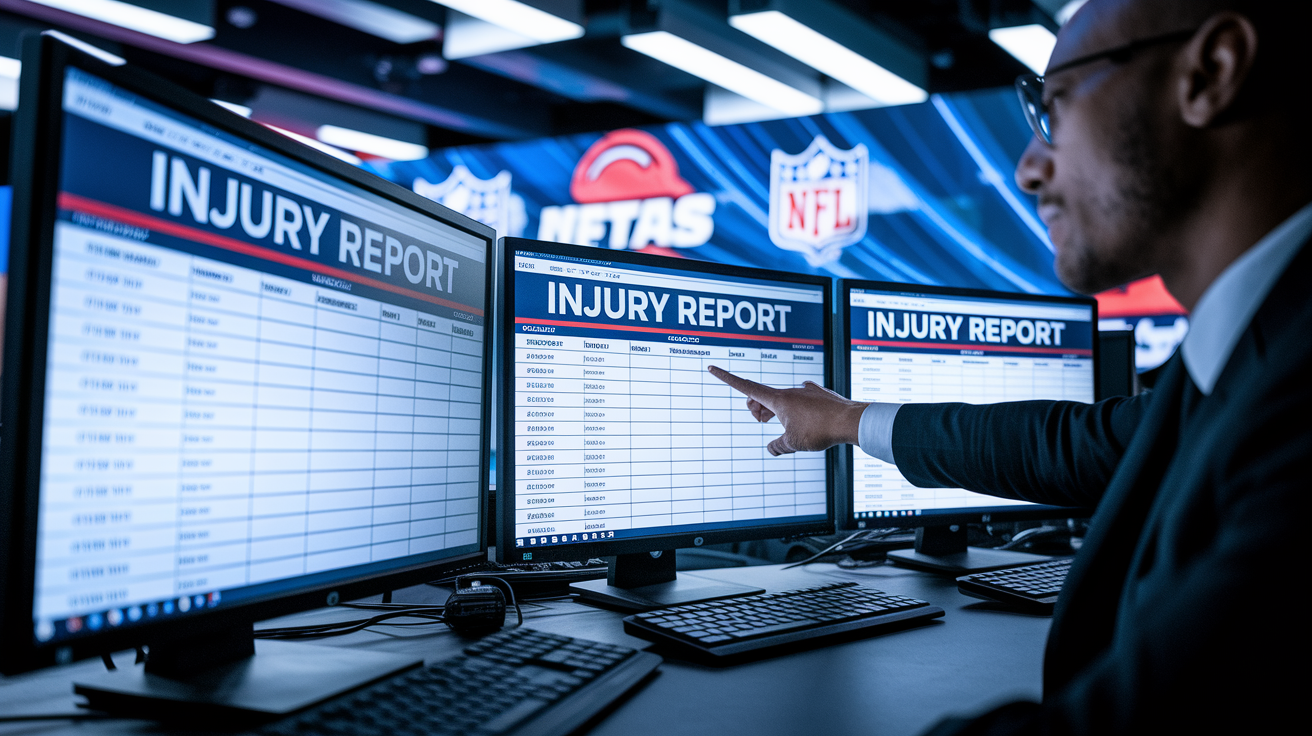
Every NFL injury report follows the same template: player name, injured body part (no diagnosis unless the team volunteers it), and that day’s participation level. Full, Limited, or Did Not Practice. Teams publish updates after each practice session during game week, typically Wednesday through Friday for Sunday games, plus Saturday if there’s a walk‑through. The final report drops roughly 90 minutes before kickoff with the official game‑day status: Out, Doubtful, Questionable, or no tag at all (which means available).
Reports update throughout the week because conditions change. A Wednesday limited tag doesn’t lock you into a Friday Questionable. Medical staff re‑check after every session, tweaking the participation level and injury status based on how the player moved, tested, and felt. Fantasy managers, bettors, and beat reporters refresh feeds daily to catch the shifts. Late‑week improvement or backslide directly shapes Sunday availability and output.
Team Variation in Reporting Style
The league standardized the three buckets and the status labels, but teams still do their own thing. Some franchises list every bruise and hold players out early in the week as a safety net. Others run a tougher culture, keeping participation high and injury lists short. Head coaches and medical staffs also differ in how fast they bump a player from limited to full or how honest they are about the injury in press conferences. One team calls it “hamstring tightness,” rests their star Wednesday and Thursday, brings him back full Friday. Another team says “lower body,” keeps the guy limited all week, and still suits him up Sunday. These philosophical gaps don’t change the formal tags, but they do shift how confident you can be when you’re trying to predict game‑day outcomes.
How Limited Practice Affects Game‑Day Availability

A limited tag by itself tells you nothing about Sunday. You have to read it next to the injury‑status label and the full week’s pattern. The league’s probability guide gives you rough odds: Probable is 75 percent or better, Questionable sits around 50, Doubtful drops to 25, Out is zero. A guy limited all week with a Probable tag will probably play. One limited Friday with a Doubtful tag almost never does.
Late‑week participation is what counts. If a player goes limited Monday through Wednesday but hits full Thursday and Friday while taking first‑team reps, his availability jumps close to certain, even if the official status stays Questionable for paperwork reasons. Flip side: a player limited Friday who spent most of the week “rehabbing on the side” instead of joining team drills is probably inactive, no matter how optimistic the Questionable label sounds. Daily updates reflect real‑time changes in pain, range, and testing. The Wednesday‑to‑Friday arc often matters more than any single day’s tag.
| Status Label | Approximate Chance to Play |
|---|---|
| Probable | ≈ 75% or higher |
| Questionable | ≈ 50% |
| Doubtful | ≈ 25% or less |
| Out | 0% (will not play) |
The dance between limited practice and status label is why two players with identical Wednesday limited tags can end up in completely different places Sunday. One’s climbing toward full clearance. The other’s managing a setback that’ll keep him out or barely there.
Friday Injury Report Importance and Weekly Practice Progressions

Friday’s report is the one that matters most. It captures the player’s condition after most of the game‑plan install and physical prep. Teams lock in depth charts and sub packages Friday, so a player who stays limited but participates in golden reps (Wednesday, Thursday, Friday snaps with the starters) is almost always cleared. But a player listed limited Friday who’s described in beat reports as “rehabbing on the side” or “working with trainers away from the team”? That’s a red flag. He’s probably showing up game day in street clothes, inactive.
The Friday report also triggers the league’s formal game‑status deadline. Coaches have to assign Out, Doubtful, Questionable, Probable, or leave the guy unlabeled (meaning full health) before the final report goes public, usually Saturday afternoon for a Sunday game. Bettors and fantasy managers treat Friday participation as the last hard evidence before that final label, using it to confirm or override earlier hunches. A guy who goes DNP Wednesday, limited Thursday, full Friday will almost never get a Doubtful tag. One who stays limited all three days and skips team periods Friday is unlikely to play, even if he’s officially Questionable.
Common weekly arcs and what they mean:
- DNP Wednesday → Limited Thursday → Full Friday – Classic recovery path. Player’s likely active and close to full workload.
- Limited all three days, full golden reps Friday – Managing something minor but cleared for game action. Expect normal playing time.
- Limited Wednesday/Thursday, DNP Friday – Setback or failed test. Strong chance he’s inactive Sunday.
- Full Monday/Tuesday, limited rest of week – Vet rest or minor flare‑up. Watch Friday status and game‑day label closely.
Historical Outcomes: How Often Limited‑Listed Players Actually Play

History shows most players tagged limited at some point during the week still suit up Sunday, as long as they improve by Friday. Industry tracking suggests when a player is limited Wednesday and Thursday but takes full reps Friday, especially with the first team, the play rate tops 80 percent. That number crashes if he stays limited Friday and the staff or beat guys note he’s “working off to the side” or “going through individual drills only.”
Soft‑tissue injuries are the wild card. Hamstrings and groins require objective speed benchmarks before teams trust a guy in live action. A common internal bar is hitting at least 85 percent of baseline sprint speed by Wednesday and full speed (no visible limp or short stride) by Friday. When those markers don’t get met, teams often list the player limited all week and then inactive game day, or they activate him but cut his snap count and route tree way down to dodge re‑injury. Reports that update daily let you track whether testing’s trending toward those benchmarks or stalling short.
Key historical signals for limited‑listed players:
- Players limited early (Wed/Thu) who hit full participation by Friday play in roughly 80 to 85 percent of cases.
- Players who stay limited Friday but take quality team reps still play in about 60 to 70 percent of games, though workload might shrink.
- Players limited all week who are described rehabbing separately from the team Friday play fewer than 30 percent of the time.
- Soft‑tissue stuff (hamstring, groin, calf) that keeps a guy limited Friday without documented full‑speed running almost always ends in inactive status or sharply diminished output the first game back.
- Vets on rest‑management plans (common for older running backs or linemen with chronic issues) can show limited multiple weeks straight yet play every game without snap‑count drop.
Interpreting Limited Practice by Position Group
Running Backs
Running backs live on explosive burst, cutting, and contact balance, so a limited tag tied to lower‑body stuff (hamstring, ankle, knee) is a yellow flag even if he’s Questionable. If the back isn’t logging full‑speed reps by Friday, expect a reduced workload or higher chance of in‑game flare‑up. Teams will often activate a limited back as a decoy or change‑of‑pace option, giving the backup most early‑down carries. On the flip side, a back limited for rest or minor upper‑body stuff (shoulder, hand) typically plays his normal share if he’s taking goal‑line and third‑down reps with the starters during the week.
Quarterbacks
Quarterbacks can play through injuries that would sideline skill guys because the position needs less straight‑line speed and cutting. A limited tag for a quarterback usually signals throwing‑shoulder trouble, rib injury, or ankle sprain messing with footwork. The test is whether he takes first‑team reps in team periods by Thursday or Friday. If he does, he almost always starts. Mobility and deep‑ball zip might be compromised, but decision‑making and short‑to‑intermediate timing stay intact. A quarterback who stays limited Friday and only works with the backup unit is unlikely to play, and the team will publicly name the backup starter before Sunday.
Wide Receivers
Wide receivers need full speed and route sharpness, making hamstring, groin, and ankle injuries especially ugly when paired with a limited tag. A receiver limited Wednesday and Thursday who runs full routes with the starting quarterback Friday is a safe bet. One who stays limited Friday and is noted running “select routes” or “working one‑on‑one with trainers” might be active but see way fewer targets and snaps. Receivers also sometimes show limited for rest when managing chronic soft‑tissue problems. Watch for repeat limited tags across multiple weeks without a matching inactive game. That’s a sign the player’s being managed, not recovering from something fresh.
Offensive Linemen
Offensive linemen rarely hit the injury report unless the issue stops them from executing technique: ankle sprains limiting lateral movement, shoulder injuries affecting punch and hand placement, or concussions. A limited lineman who participates in team pass‑pro and run‑blocking drills by Friday will usually start, even if total reps are down. Line play is less about top speed and more about leverage and hand use, so many linemen can perform near full effectiveness while still listed limited. The worry comes when the injury hits the dominant hand or plant leg and the player’s held out of contact work entirely. In those cases, the backup often gets the start even if the starter’s officially Questionable.
Defensive Players
Defensive guys, especially edge rushers, linebackers, and safeties, need burst, change‑of‑direction, and tackling force. All of that gets wrecked by lower‑body and core injuries. A defensive back limited with a hamstring or groin might play but struggle in man coverage or deep‑zone assignments requiring sudden acceleration. Edge rushers limited with ankle or knee stuff often see reduced snaps on obvious passing downs to save their burst for key third‑down moments. Defensive linemen, like offensive linemen, can often play through upper‑body and hand injuries that limit practice but don’t stop them from gap control and bull rushes. The golden‑reps rule still applies: if the defender’s taking first‑team snaps in Friday’s team period, expect him active and in the rotation.
Practical Fantasy Football Impact of a Limited Practice Tag

Fantasy managers should treat limited practice as a yellow flag requiring daily monitoring, not an automatic bench decision. Track the Wednesday‑to‑Friday progression and cross‑reference practice participation with the official injury label and beat‑reporter notes. A player limited Wednesday who moves to full by Friday and carries a Probable or unlabeled status is almost always safe to start at projected volume. A player who stays limited Friday and is described rehabbing separately should be benched or replaced unless you’re out of viable alternatives.
Soft‑tissue injuries (hamstrings, groins, calves) deserve extra caution. Even if the player’s active, performance often drags in the first game back when he hasn’t shown full speed by Friday. Look for beat reports or video clips confirming the player ran routes or drills at “full speed” or hit speed benchmarks above 85 percent by Wednesday and 100 percent by Friday. If those markers aren’t met, expect watered‑down stats: fewer deep targets for receivers, reduced carry volume for backs, shorter routes, conservative play‑calling. Fantasy scoring suffers when a player’s on the field in name only, capped at 60 to 70 percent of normal snaps and avoided in high‑leverage situations.
The limited tag also opens doors for handcuffs and backups. When a star running back or receiver is limited all week, the backup often gets increased reps with the first team, signaling the coaching staff is prepping a bigger role. Make waiver pickups before Friday’s final report if you can, because once a starter drops to Doubtful or Out, the backup’s roster percentage and cost spike. But if the limited player takes golden reps Friday, drop or fade the backup unless he has standalone value in a committee.
Fantasy checklist when a key player shows limited:
- Monitor the report daily. Statuses and participation shift Wednesday to Friday.
- Prioritize players who move from limited to full by Friday and take starter reps in team periods.
- Treat “limited Friday, rehabbing on the side” as a strong inactive signal. Have a backup ready.
- For hamstring and groin stuff, confirm the player’s running full speed by Friday before trusting normal production.
- Add the backup early in the week if the starter stays limited Wednesday and Thursday without clear progress.
- Use probability labels (Probable/Questionable/Doubtful) combined with practice trends, not alone, to make start/sit calls.
For deeper context on how fantasy platforms show injury tags, see Mastering NFL Injury Reports (Fantasy).
Limited Practice and Its Betting Implications

Sportsbooks move point spreads, totals, and player props as soon as Friday reports hit, and sharp bettors use limited‑practice trends to predict those shifts or find value before the market corrects. A star quarterback or running back staying limited Friday will often trigger a half‑point to full‑point spread change within minutes of the report going live, especially if beat reporters note reduced reps or sideline work. Bettors tracking Wednesday and Thursday can place early wagers before the Friday update locks worse odds, or wait for the final game‑status announcement and bet the adjusted line if they think the market overreacted.
Player‑prop markets are especially touchy about limited tags. A wide receiver limited all week might see his reception and yardage lines drop even if he’s officially Questionable, because oddsmakers expect reduced snaps or conservative game‑planning. The backup’s props will rise, creating potential value if he’s underpriced relative to expected volume. Team totals also shift when a key offensive player is limited Friday without full clearance, as books assume lower scoring efficiency or heavier reliance on the run game.
Betting angles for limited‑practice reports:
- Line movement often happens within minutes of the Friday report. Early‑week bets can lock better numbers before adjustments.
- A limited star on Friday typically moves the spread by 0.5 to 1.5 points, depending on position and team reliance.
- Player props (receptions, yards, touchdowns) adjust down for limited players and up for replacements. Compare opening and closing lines for value.
- Teams with cautious reporting styles may list players limited for rest, creating perceived risk that isn’t real. Historically, those players often play full snaps and beat their prop lines.
Real Examples of Limited Practice Scenarios
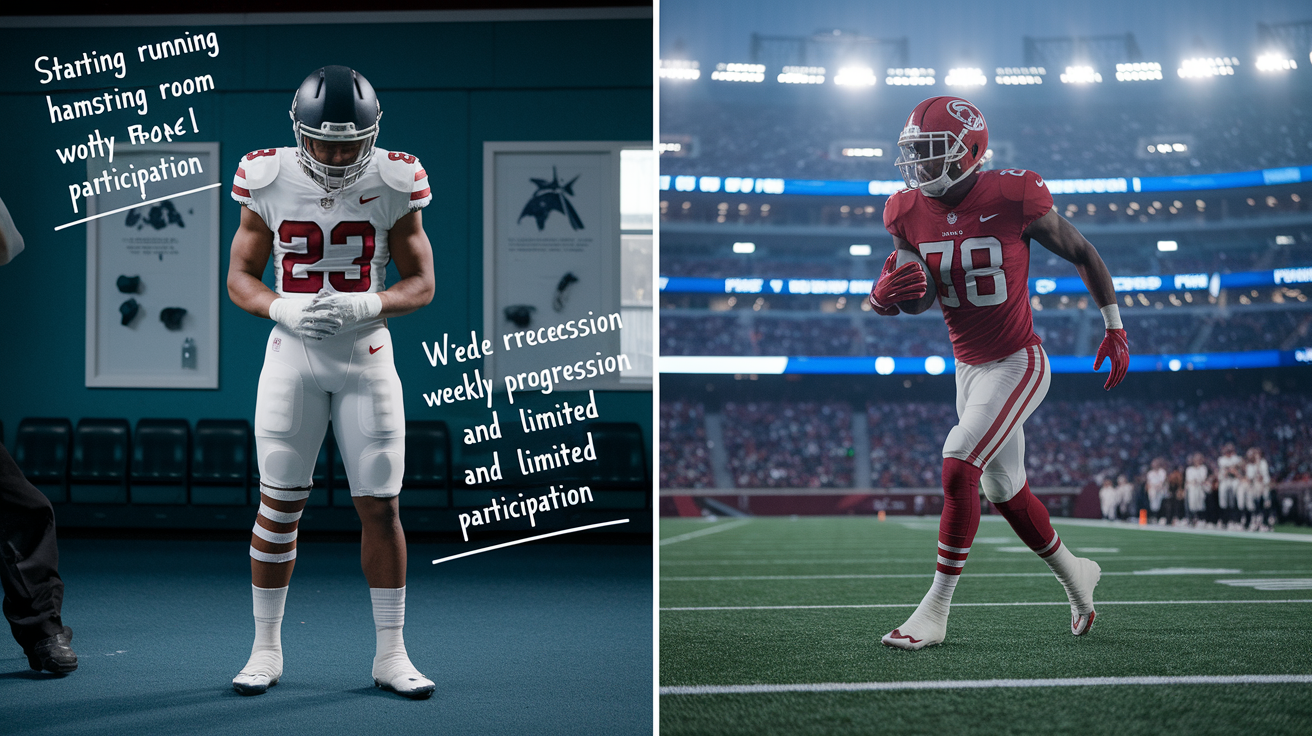
Common scenario: a starting running back tweaks his hamstring late in the previous game, sits out Wednesday (DNP), logs limited reps Thursday running routes and individual drills but no team work, then Friday participates in team periods at what reporters call “close to full speed.” He finishes the week Questionable. He plays Sunday, handles his usual early‑down work, but the staff pulls him on third‑and‑long and in the two‑minute drill to dodge re‑injury, capping his snap count around 65 percent. Fantasy managers who started him based on the Questionable tag see underwhelming volume. Bettors who took the under on his rushing‑yards prop cash easy.
Another case: a wide receiver appears on Wednesday’s report limited with an ankle injury. Thursday he stays limited, working only individual routes. Friday he takes every first‑team snap in the red‑zone period, runs full‑speed go routes, and the head coach tells reporters “he’ll be fine.” Final status is Probable (or unlabeled). He plays full snaps Sunday, catches a touchdown, and blows past his yardage prop. The Wednesday and Thursday limited tags were precautionary. The Friday full‑speed confirmation was the green light.
| Case | Outcome | Key Indicators |
|---|---|---|
| RB limited Thu/Fri, “close to full speed” Friday | Played but reduced snaps (~65%); underwhelming fantasy/props | Soft‑tissue injury, no full‑speed confirmation, Questionable tag, limited team‑period reps Friday |
| WR limited Wed/Thu, full first‑team reps Friday | Played full snaps, exceeded projections | Full‑speed routes Friday, Probable/unlabeled status, coach confirmation, golden reps with starting QB |
How Teams Assign Limited Practice Labels

Athletic trainers and team physicians decide each player’s practice level by checking range of motion, strength tests, pain response, and functional movement during pre‑practice checks. A player might pass a straight‑line sprint test but fail a lateral shuffle or cutting drill, earning limited because he can do some team periods but has to skip full‑contact or change‑of‑direction work. Trainers also lean on self‑reported pain and confidence. A cautious vet may ask to sit out Wednesday contact even if testing shows he’s physically capable, while a younger player eager to prove himself may push to go full despite lingering discomfort.
Teams run under an internal guideline often called Rule #1: don’t disclose specific medical details unless that info’s already public or the player consented. That’s why injury reports list only the body part (hamstring, ankle, shoulder) without diagnosis, grade, or timeline. The limited tag reflects the trainer’s judgment that the player can safely do some work but not all, based on those confidential tests and the risk/reward calculus of protecting long‑term health versus keeping game readiness. Rest days for vets also show up as limited or DNP tags even when there’s no acute injury. Teams use injury‑report language to manage workload and dodge publicly splitting “injury” from “rest,” which can create competitive downsides or media noise.
Advanced Techniques for Reading Limited Practice Notes
Experienced fantasy managers and bettors look past the simple “limited” label and parse the language in team releases and beat‑reporter tweets. Phrases like “took some of the reps” or “worked on the side with trainers” late in the week are red flags, often predicting inactive status even if the player carries a Questionable tag. “Full participant in team drills” or “ran with the ones” on Friday is a strong positive, suggesting the player will be active and see normal usage regardless of the limited tag earlier in the week. Tracking this language day to day reveals the true arc better than the participation label alone.
Combining current injury data with a player’s medical history adds another layer. A receiver who missed two games last season with a hamstring and now reappears on the report with the same thing (limited Wednesday, limited Thursday) should get extra skepticism even if he goes full Friday, because soft‑tissue stuff tends to come back and teams may be extra careful in‑game. On the other hand, a lineman with a long history of showing limited for rest every Wednesday who always plays full snaps Sunday is a safe start despite the recurring tag. Historical patterns by player and by team reveal which limited listings are precautionary maintenance and which signal real risk.
Signs a player’s being rested rather than injured: limited tags showing up the same day each week (usually Wednesday), no matching injury designation or a vague “rest” note, full participation by Friday, and a track record of the same pattern across multiple weeks or seasons. When those signs line up, the limited tag has almost zero predictive value for game‑day availability or performance.
Advanced checklist for reading limited notes:
- Parse beat‑reporter language: “some reps” or “side work” Friday is bad. “Full team drills” or “with the ones” is good.
- Cross‑reference the current injury with the player’s medical history for recurring soft‑tissue or joint problems.
- Track team‑specific patterns. Some clubs routinely list vets limited Wednesday for rest. Others are transparent about rest vs. injury.
- Confirm soft‑tissue injuries with speed benchmarks. Look for reports of “full speed” or “no limitations” by Friday before trusting normal production.
- Monitor practice trends across the week: improvement (DNP → Limited → Full) predicts high availability. Stagnation or backslide (Limited all week, DNP Friday) predicts inactive or reduced role.
- Compare the limited player’s Friday reps to the backup’s. If the backup’s taking first‑team snaps in key periods, the starter’s status is in real doubt.
Different platforms show injury data in different formats. For a breakdown of how fantasy sites present these tags, see FantasyPros Injury Guide.
Final Words
in the action, limited means a player did some but not all drills, a middle ground between full and DNP. Staff use participation metrics, internal tests and golden reps to decide it. Reports update daily.
It usually points to managed workload or soft-tissue caution and maps to mid-level play odds, think probable ~75%, questionable ~50%, doubtful ~25%.
When you’re deciding lineups or bets, knowing how to interpret limited practice designation on NFL injury report turns that label into usable edge, so watch Wed-Fri reps and updates. Stay sharp, it often signals hope, not doom.
FAQ
Q: What does “limited” mean on an NFL injury report?
A: The “limited” designation on an NFL injury report means a player took part in some but not all practice drills; it can still lead to game action if they log quality late-week “golden reps.” Reports update daily.
Q: What do NFL injury designations mean?
A: NFL injury designations mean the practice participation level — Full, Limited, or DNP — set by trainers using participation metrics and internal tests. Probable ≈75%+, Questionable ≈50%, Doubtful ≈25%, Out = 0%.