


Is VAR ruining football — or the only thing stopping obvious mistakes from deciding matches?
VAR is a video-review system that fixes clear errors in four game-changing cases: goals/offside, penalties, straight red cards, and mistaken identity.
This post walks the full review process step by step — who watches from the Video Operation Room, how VAR signals the referee, and when an on-field monitor gets used.
You’ll get clear answers fast: what triggers reviews, how offside lines are drawn, typical timing, and what actually changes next game.
Core Breakdown of How VAR Works During Football Matches
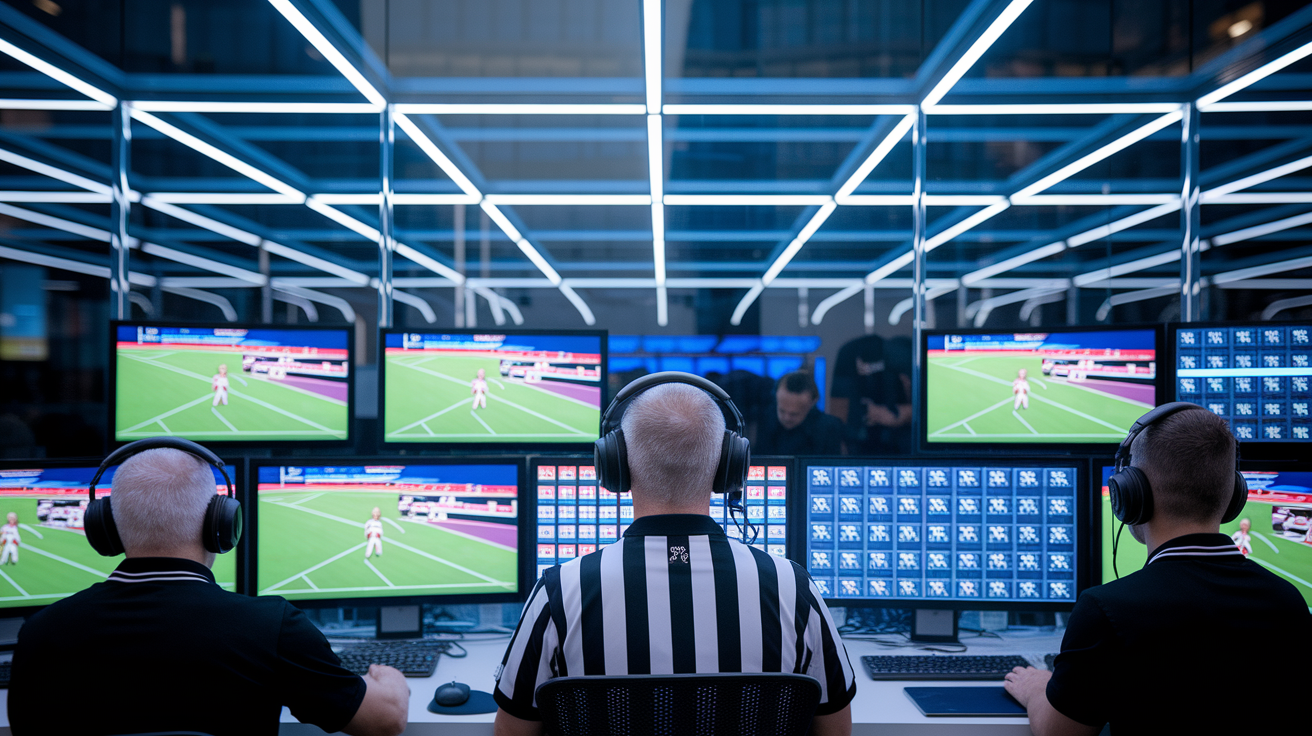
VAR helps referees fix clear mistakes in four situations that can flip a match: goals and offside, penalty calls, straight red cards, and mistaken identity when handing out cards. It doesn’t review every foul or second-guess soft decisions. Just the ones that actually change outcomes.
A VAR team watches from the Video Operation Room. Usually a lead Video Assistant Referee, one or two assistants, and a replay operator. They’re glued to multiple HD monitors, rewinding angles, zooming in, slowing things down frame by frame. When something looks wrong, they talk to the on-field referee through a headset.
The referee still makes the final call. After hearing what VAR found, they can accept it and reverse their decision, ignore it and stick with what they called, or walk over to the pitch-side monitor for a closer look. Most checks finish in under two minutes. Offside confirmations can be done in 30 seconds. Messy handball or contact situations take longer.
Here’s how it usually goes:
- Something happens — goal scored, penalty given or missed, possible red card challenge, wrong player gets carded.
- VAR checks — the team in the VOR scrubs through camera feeds, slow motion, freeze frames, looking for an obvious error.
- VAR speaks up — they tell the referee “all clear” or “you should take another look.”
- Referee chooses — accept the VAR advice and change the call, wave it off and keep the original, or review it on the sideline screen before deciding.
- Match continues — decision gets announced, players get told, broadcast updates, play restarts.
Types of VAR Reviews Used in Football Matches
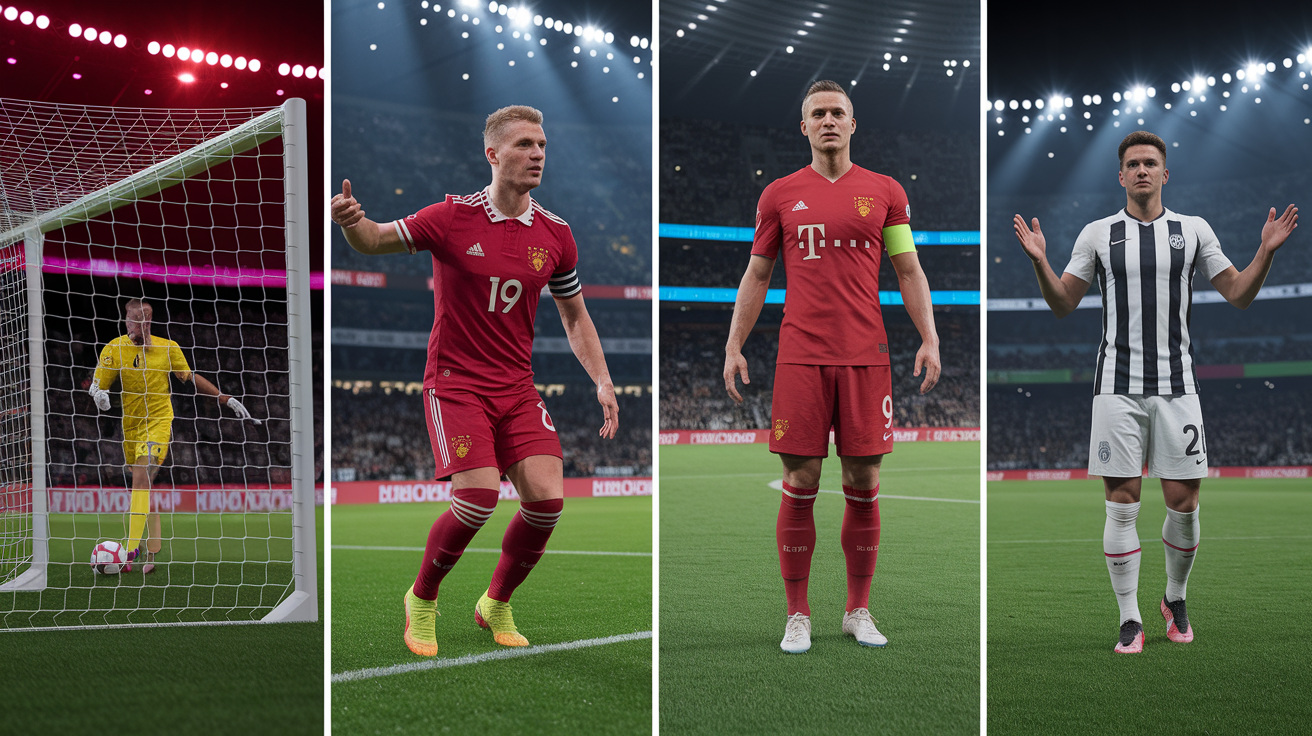
Goals and offside. Every goal gets checked automatically. VAR scans for offside, fouls, handballs, anything dodgy in the buildup. If a player was offside when the pass came, or someone fouled the keeper, or a hand touched the ball before it went in, VAR flags it. The goal can get wiped out. This includes those tight marginal calls where they draw virtual lines on the screen to see if a shoulder was ahead by a few centimeters.
Penalty decisions. VAR reviews penalties that were given and ones that should’ve been but weren’t. Contact in the box, handball, foul that killed a scoring chance. They queue up angles showing exactly where contact happened, whether it was deliberate, whether it was even inside the area. If the referee missed a blatant trip or handed out a penalty for a dive, VAR steps in.
Direct red card incidents. Straight reds only. Violent conduct, horror tackles, denying a clear goal chance, spitting. Second yellows don’t get reviewed unless it should’ve been a straight red from the start. Slow motion helps figure out if a challenge was just clumsy or genuinely dangerous enough to send someone off.
Mistaken identity. Wrong player gets booked, VAR fixes it. They check the footage, spot who actually committed the foul, tell the referee the right number. Card gets moved before play resumes. Stops an innocent player from getting punished for something they didn’t do.
VAR Communication and On‑Field Review Procedures
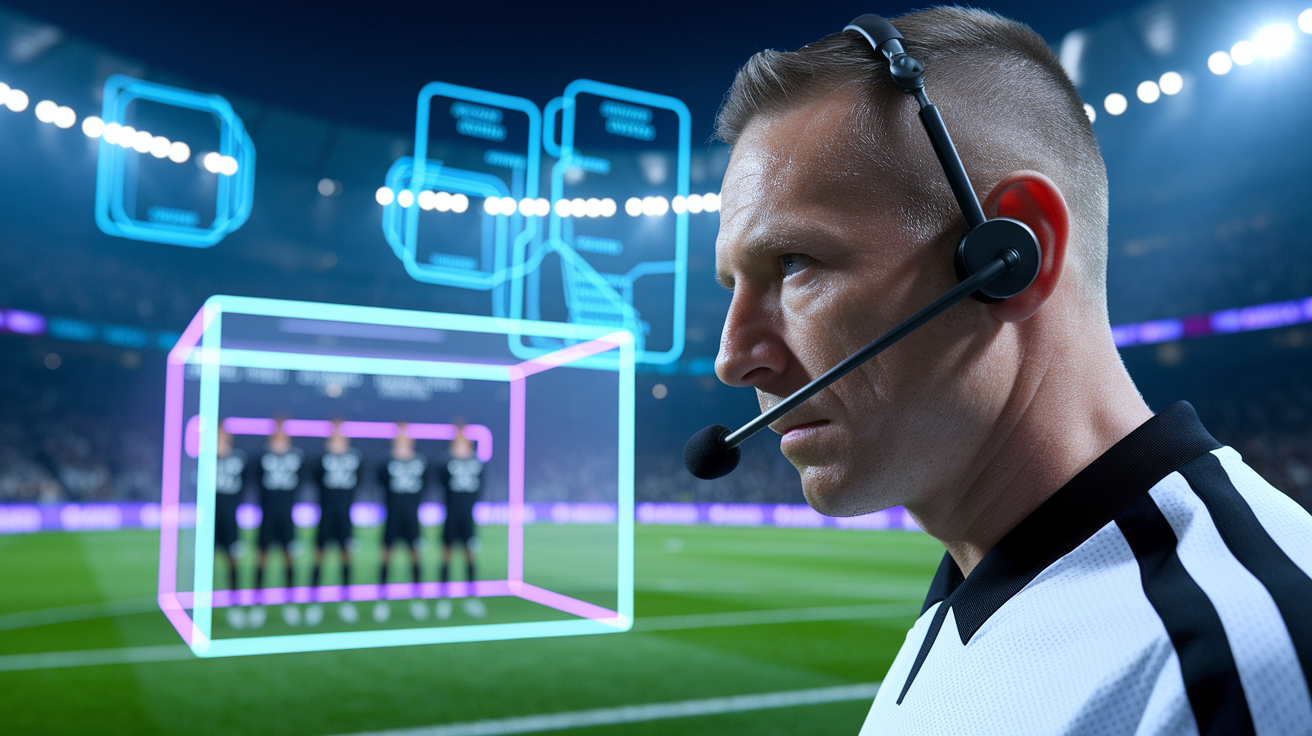
The Video Assistant Referee sits in the VOR with a headset linked to the on-field ref’s earpiece. They’re talking constantly, mostly in the background while the match rolls on. When VAR spots something, they’ll say “possible penalty, recommend a check” or “offside on that goal.” The referee hears it live and decides whether to act right away or wait for VAR to finish before signaling anything.
Once VAR wraps up their analysis, the referee’s got three moves: take the recommendation and reverse the call without looking at replays, ignore it and keep the original decision, or walk to the pitch-side monitor for an on-field review. That monitor sits on a stand near the touchline. Referees watch the same angles VAR saw, then make the call. While they’re reviewing, players get kept back and everyone sees the TV-screen gesture—that rectangle shape drawn with the hands.
Common signals during VAR checks:
- Pointing to the ear — getting info from VAR on the headset.
- Rectangle hand gesture — TV review happening or coming up.
- Arms waving or pointing to the spot — final decision after the review.
Technical Setup and Video Technology Behind VAR
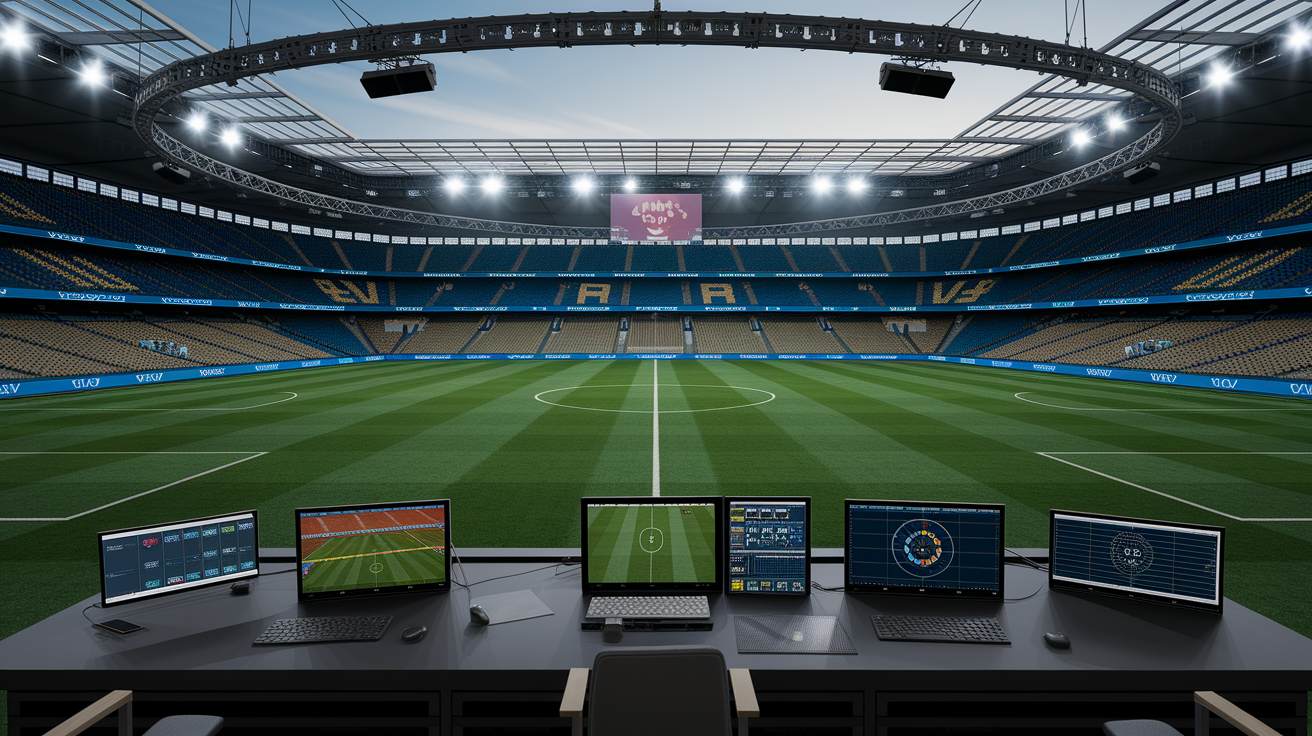
Stadiums running VAR set up multiple HD cameras around the pitch. Usually eight to twelve dedicated angles, plus extra ultra-slo-mo and behind-goal cameras depending on the league. Each camera shoots 50-plus frames per second, all synced so the VAR team can watch the same moment from every angle at once. Zoom lets them examine tight contact, ball position, hand placement, all frame by frame.
The Video Operation Room’s packed with monitors showing live and recorded feeds. One screen might have the broadcast view, another the wide tactical angle, several more covering isolated positions. A replay operator sits with the VAR and assistants, cueing clips, toggling slow motion, rewinding to the exact frame where something kicked off. They control playback speed and can stack graphics like freeze frames or split screens for side-by-side comparisons.
Offside calls use digital line-drawing tools calibrated to the pitch markings. The system finds the moment the ball left the passer’s foot, freezes that frame, projects vertical lines from the relevant body parts of attacker and defender. Lines adjust for camera angle and distance. Some competitions use semi-automated offside tech with tracking sensors in the ball and optical tracking of player limbs, which draws the offside line automatically and shaves seconds off review time.
| Technology Component | Purpose | Key Features |
|---|---|---|
| HD Camera Array | Capture multiple synchronized angles of every incident | 8–12+ cameras; slow motion; zoom; 50+ fps |
| Video Operation Room (VOR) | Central hub where VAR team reviews footage | Multiple monitors; replay operator; synchronized feeds |
| Replay Software | Frame-by-frame and multi-angle playback | Slow motion; freeze-frame; split-screen comparison |
| Offside Line System | Determine marginal offside positions | Virtual lines; pitch calibration; semi-automated tracking (some leagues) |
Offside Decisions and Virtual Line Calibration in VAR
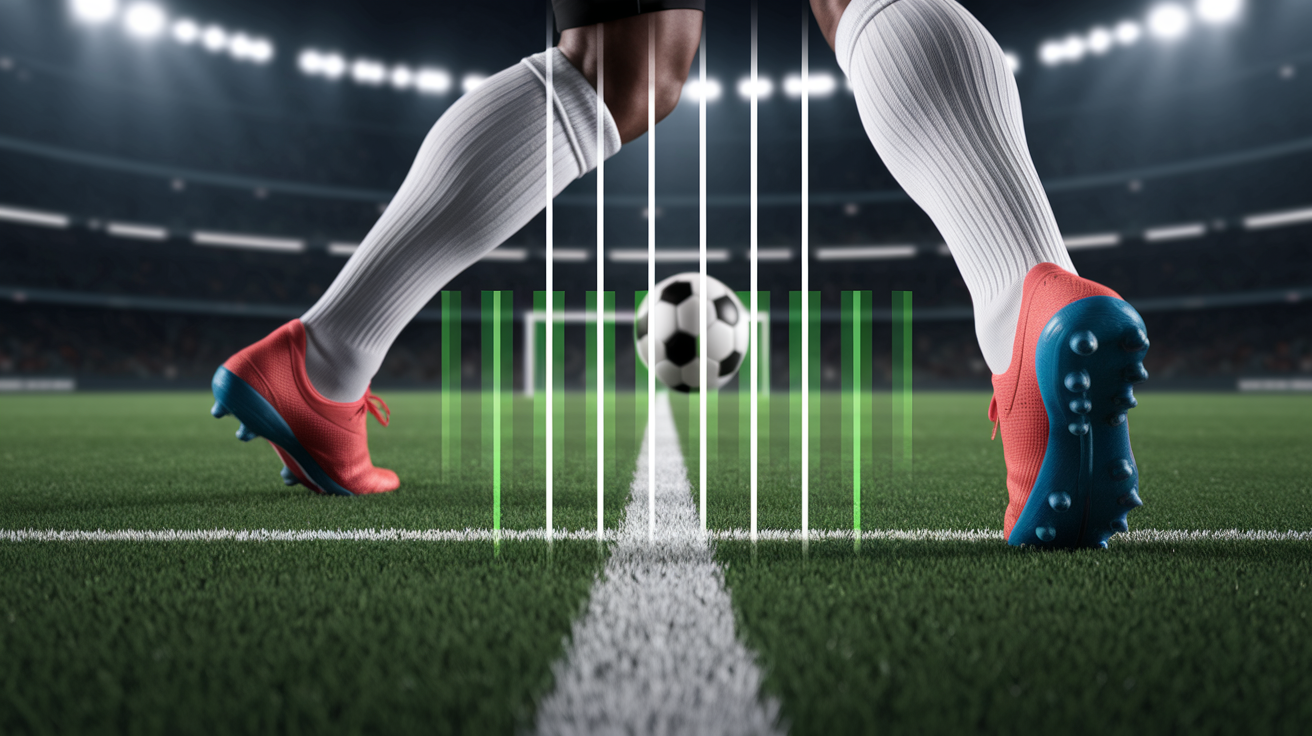
Checking offside starts by nailing down the exact frame when the ball left the passer’s boot or head. The replay operator rewinds, freezes the image, then draws vertical lines from the second-to-last defender and the attacker. Lines go from the nearest goal-side body parts that can legally play the ball. Shoulders, feet, head count. Arms don’t. If any eligible part of the attacker’s ahead of the defender, it’s offside. Level or behind, goal stands.
Camera angle matters. A side view might make someone look offside when the goal-line camera shows they’re level. VAR picks the clearest synced angle and calibrates the line overlay to the pitch grid. In super tight calls measured in centimeters, semi-automated systems track 29 data points on each player’s body ten times per second, feeding coordinates into the line software instantly. FIFA and UEFA rolled out semi-automated offside at major tournaments in the early 2020s to cut manual drawing time and reduce calibration mistakes.
Steps in offside line calibration:
- Find last touch — freeze the exact frame when the passer plays the ball.
- Pick clearest angle — choose the camera showing both attacker and defender lined up with the pitch grid.
- Draw defender line — vertical line at the second-to-last defender’s farthest forward eligible body part.
- Draw attacker line — second line at the attacker’s nearest forward part; compare and confirm offside or onside.
Timing, Match Flow, and “Clear and Obvious” Standards in VAR
Most VAR reviews wrap in under two minutes. Simple factual checks like confirming offside or whether the ball crossed the line often finish in 30 seconds because there’s no judgment involved, just freeze-frame proof. Complicated stuff involving contact, intent, whether a handball was deliberate takes longer since the VAR team’s reviewing multiple angles and speeds before making a call.
Play stops when something serious gets reviewed, especially if the referee signals for an on-field check. Match stays paused while they walk to the monitor, watch replays, decide. Referees tack the review time onto stoppage at the end of the half, so total playing minutes stay roughly the same. Fans and players see the delay. But the trade-off’s fewer match-wrecking mistakes going uncorrected. Competitions track average review time and try to keep it short without rushing accuracy.
The “clear and obvious” standard sets the bar for overturning calls. VAR doesn’t re-referee every close decision. If reasonable officials could disagree, the original stands. Only when the video makes the error undeniable does VAR recommend a change. Missed handball leading to a goal, penalty given outside the box, violent conduct the ref didn’t see. Marginal subjective calls, like soft contact or whether a challenge was careless versus reckless, lean toward keeping the ref’s initial judgment unless replay proves it clearly wrong.
Real Match Scenarios Showing VAR in Action
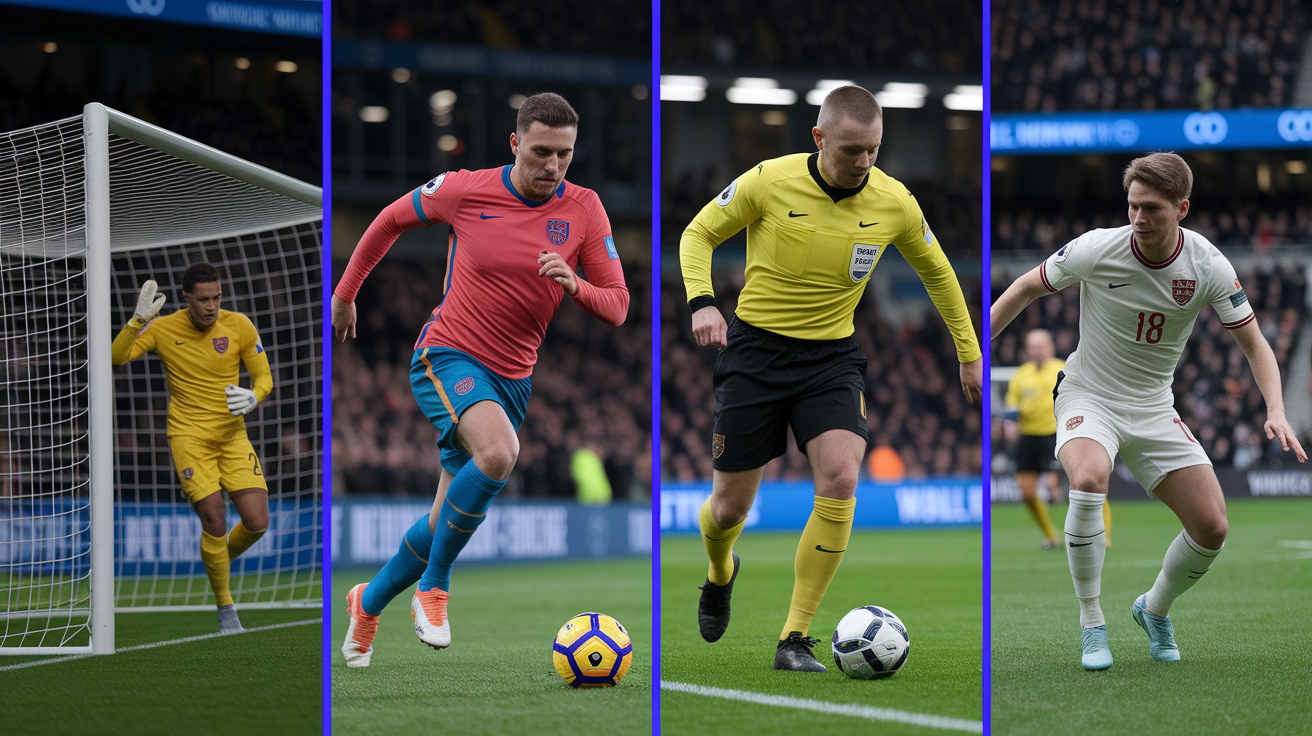
Goal and offside check. Striker taps in a rebound after a scramble near goal. Assistant ref’s flag stays down, goal given. VAR immediately rewinds to when the initial shot was taken. Frame-by-frame shows the striker’s shoulder a few centimeters ahead of the last defender when the ball left his teammate’s foot. Virtual lines confirm offside. VAR tells the ref, who signals no goal. Play restarts with a free kick.
Penalty contact evaluation. Attacker goes down in the box. Referee waves play on, no penalty. VAR reviews three angles in slow motion and spots the defender’s trailing leg clipping the attacker’s planted foot before touching the ball. Clear trip inside the area. VAR recommends an on-field review. Referee walks to the monitor, watches the clip twice, awards the penalty. Defender gets a yellow.
Red card violent conduct. Two players clash off the ball during a stoppage. Referee sees pushing but misses one player swinging an elbow at the other’s face. VAR reviews from a wide angle showing the elbow connecting with the opponent’s jaw. VAR says “violent conduct, recommend red.” Referee calls the player over, shows a straight red, sends him off. Match resumes with a free kick.
Mistaken identity correction. Defender commits a tactical foul, pulling back an attacker. Referee blows the whistle and shows a yellow but gives it to the wrong defender, number 5 instead of 4. VAR catches the mistake, identifies the actual fouling player from jersey number and position, relays the correction. Referee takes back the yellow from the innocent player, shows it to number 4 instead. Play continues with the right player cautioned.
Challenges, Criticisms, and Accuracy of VAR Decisions
VAR pushed match-officiating accuracy from around 92 percent to over 98 percent in major leagues. Fewer game-changing mistakes slip through. Goals wrongly allowed or disallowed, missed red cards, phantom penalties all dropped. The system’s especially good with factual decisions. Offside, ball in or out, mistaken identity. Video evidence settles it.
Criticisms land on delays, subjectivity, cost, communication. Reviews kill momentum. Fans in the stadium often don’t know what’s being checked or why until the decision comes through. Subjective calls like “was that contact enough to deny a clear opportunity” or “was the handball deliberate” still spark arguments even after a review. High setup costs lock out smaller leagues. Cameras, VOR infrastructure, trained officials. Transparency’s inconsistent. Some competitions explain VAR decisions over the PA or with graphics, others leave everyone guessing.
Timing and flow get the most complaints from fans. Two-minute reviews feel longer when the stadium goes quiet and players stand around waiting. Competitions keep refining protocols to speed things up. Semi-automated offside, better camera angles, clearer communication standards. But the balance between speed and getting it right will always be there. The aim’s to catch errors that matter without grinding the match to a halt every five minutes.
| Metric | Before VAR | After VAR Implementation |
|---|---|---|
| Match-officiating accuracy | ~92% | Over 98% |
| Typical review duration | N/A | Under 2 minutes (simple checks <30 seconds) |
| On-field review frequency | N/A | Roughly 1 in 3 matches |
Final Words
Right in the action: you now know the basics – what incidents VAR covers, who operates it, and how on-field reviews play out.
We walked through the tech, offside calibration, timing expectations, real match scenarios, and the main criticisms – plus the step-by-step workflow from incident to final call.
If you still wonder how does VAR work in football matches, the short answer is: it’s an advisory video team using multi-angle replay to spot clear and obvious errors while the referee keeps final say. It’s not perfect, but it makes big calls fairer and should improve the watching experience.
FAQ
Q: What is the VAR rule in football?
A: The VAR rule in football defines when and how video assistant referees may review four incident types — goals, penalties, direct red cards, and mistaken identity — to correct clear and obvious errors or serious missed incidents.
Q: Why don’t fans like VAR?
A: Fans dislike VAR because it interrupts the flow, feels inconsistent or cold with frame-by-frame offside rulings, and often kills the live emotional moment; poor communication and delays add to the frustration.
Q: Can a referee ignore VAR?
A: A referee can reject a VAR recommendation because the on-field official retains final authority; they may accept, overturn, or perform an on-field monitor review after a VAR check.
Q: Who pays for VAR?
A: VAR is paid for by competition organizers, leagues, or host clubs, who cover equipment, camera feeds, and Video Operation Room costs; broadcasters or tournament hosts sometimes share expenses.