


Think “Questionable” is a 50-50 coin flip? Think again.
Since the NFL removed Probable in 2016, that label’s old meaning got absorbed into Questionable and the real odds shifted.
That matters if you play fantasy, bet games, or just want to know who actually suits up on Sunday.
This intro breaks down what Probable used to mean, what Questionable means now, how practice tags change those odds, and the simple rules you can use to set lineups with confidence.
Clear Breakdown of Probable vs Questionable on NFL Injury Reports
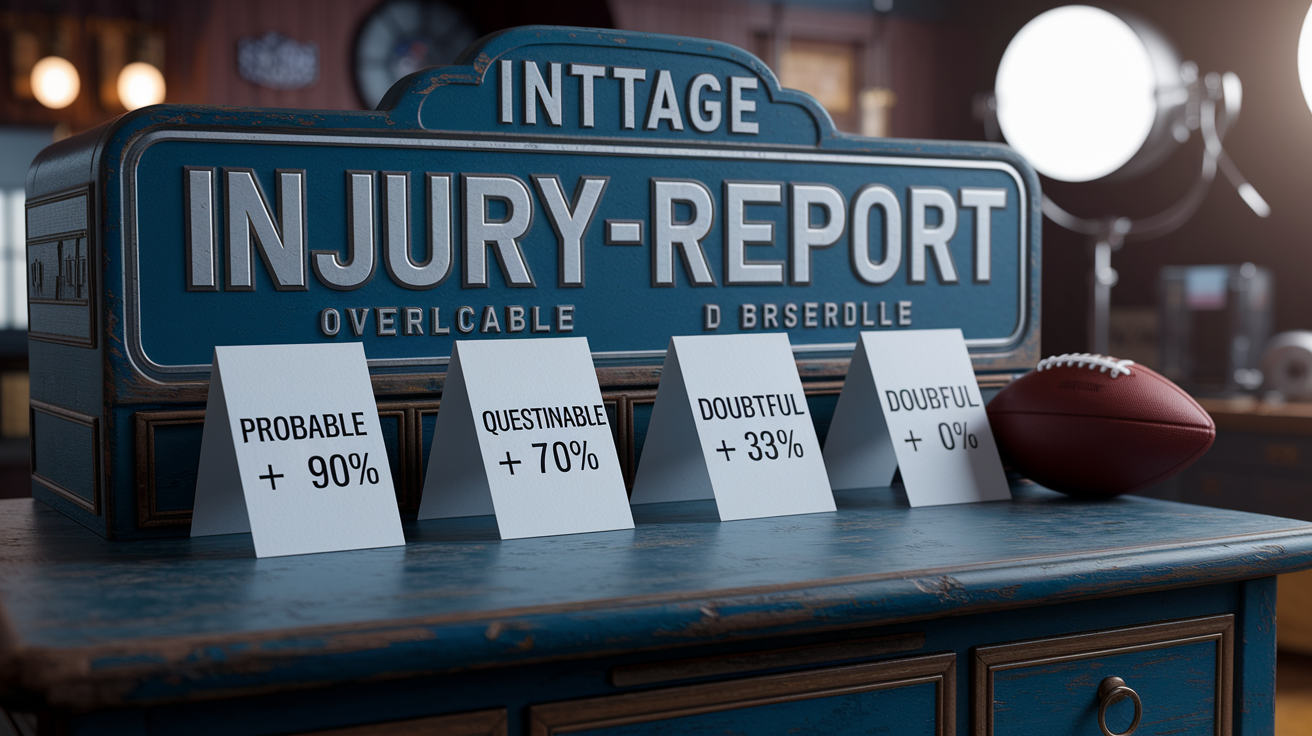
Back in the day, NFL injury reports ran on four game-status tags to tell you how likely a player was to show up on Sunday. Probable was supposed to mean around 75 percent chance to play. Minor concern, but he’d probably suit up. Questionable sat at 50 percent, a real toss-up between playing and sitting. Doubtful was roughly 25 percent, meaning the guy would almost definitely miss the game, and Out was zero percent, confirming he wouldn’t dress. Those official percentages were meant to give fans, bettors, and fantasy managers a standard way to read each week’s injury news.
Real-world numbers didn’t match up. A 2011 Wall Street Journal breakdown covering 2006 through 2011 found that Probable players actually played in over 90 percent of games, way above that 75 percent guideline. Questionable guys played about 55 percent of the time, pretty close to the 50 percent mark. Doubtful players appeared in fewer than 3 percent of games, making the label basically the same as Out for lineup calls. The gap between what the league said and what actually happened meant smart fantasy managers learned to treat Probable as a lock and Doubtful as a near-certain scratch.
In 2016, the NFL scrapped the Probable tag from all official injury reports. The league wanted to streamline things and cut down on confusion, but what really happened was a reshuffle of how teams labeled players. Around 30 to 35 percent of player-weeks that used to get slapped with Probable were bumped up to Questionable after the change, while the other 65 to 70 percent just vanished from the game-status report altogether. So now, post-2016 Questionable players actually play at a higher rate, closer to 70 to 75 percent, because the label absorbed a bunch of guys who would’ve been automatic Probables under the old setup.
- Probable (historical, removed 2016): Official 75% definition, observed play rate over 90%
- Questionable (pre-2016): Official 50% definition, observed play rate around 55%
- Questionable (post-2016): Still defined as 50%, observed play rate around 70 to 75% because it absorbed Probables
- Doubtful: Official 25% definition, observed play rate under 3%. Treat it as functionally Out
How NFL Teams Use Injury Report Designations Today

Since 2016, NFL teams work with just three game-status labels: Out, Doubtful, and Questionable. Out means the player won’t play. Zero percent chance, confirmed absence. Doubtful signals the player’s highly unlikely to suit up, with historical data showing fewer than 3 percent of Doubtful players actually taking the field. Questionable is the catch-all for uncertainty, officially a 50-50 call but now carrying a higher real-world likelihood, typically 70 to 75 percent, because it absorbed most of the old Probable bucket. Teams drop midweek practice participation reports (Wednesday, Thursday, Friday for Sunday games) and lock in the official game-status report on Friday afternoon, giving managers a tight window to tweak lineups based on the latest intel.
Practice participation is your best early-week read on availability. Players who log full participation late in the week are overwhelmingly likely to play, even if they’re still tagged Questionable because of some lingering minor thing. Limited participation suggests some restriction but doesn’t automatically rule out game action, especially for veterans or running backs who routinely rest on Wednesdays. Players who don’t participate at all, or who spend practice time “rehabbing on the side,” are way less likely to suit up, particularly if that pattern carries into Thursday and Friday. The combo of practice status and final game designation gives you the most complete picture of who’s active on Sunday.
| Designation | Official Chance | Observed Play Rate |
|---|---|---|
| Out | 0% | 0% (confirmed absence) |
| Doubtful | ~25% | <3% (functionally Out) |
| Questionable | 50% | ~70–75% (post-2016) |
Practice Participation vs Game Status: What Limited, DNP, and Full Mean
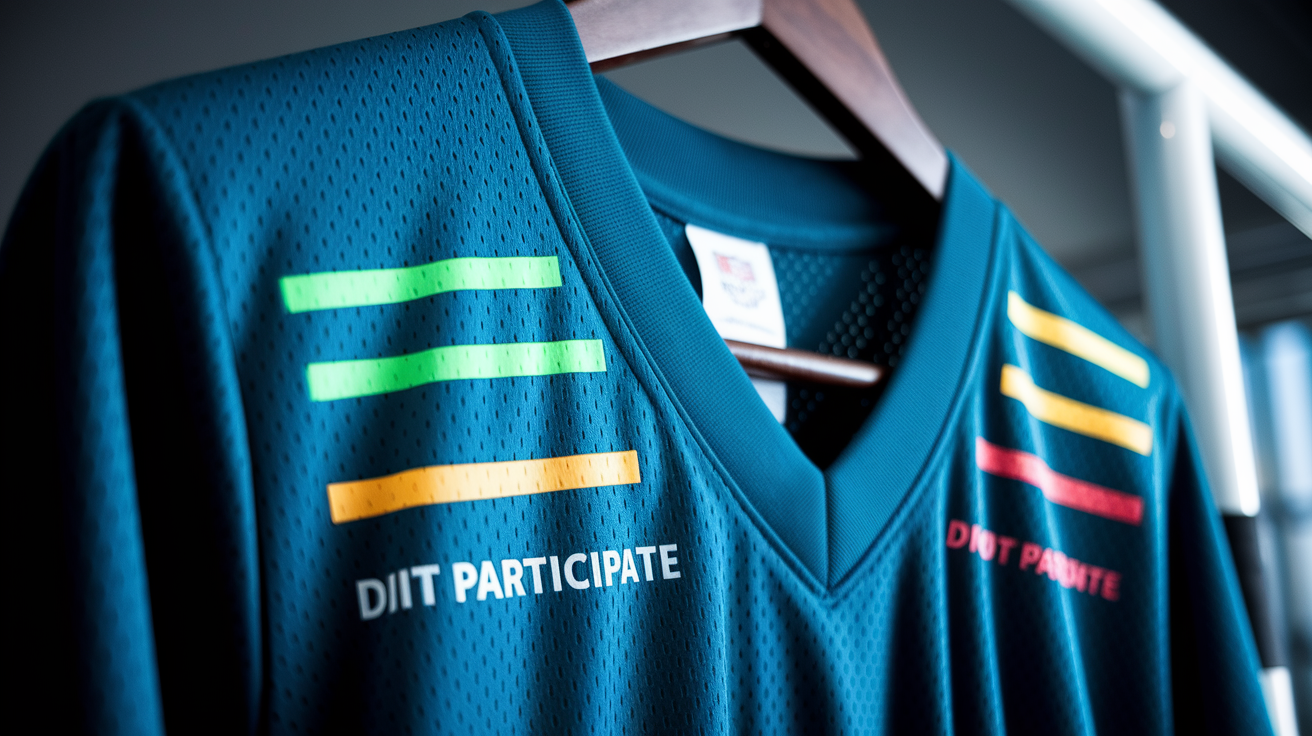
Full Participation means the player took every rep with no visible restrictions during the practice session. That’s your strongest signal he’ll be active on game day, regardless of the injury-report label. Even if a player stays listed as Questionable through Friday, full participation all week, or at least on Thursday and Friday, tells you the team expects him to play his normal role. Full-practice players rarely miss games unless something goes sideways between Friday’s session and Sunday’s kickoff.
Limited Participation covers a wide range. A player might join individual drills but skip team periods, or take first-team reps at reduced intensity. Limited practice late in the week can still lead to game action, especially for skill-position vets managing chronic stuff or running backs resting to save touches for Sunday. What matters is progression. A player who moves from limited Wednesday to limited Thursday to full Friday is trending up. A player stuck at limited all three days, or sliding from limited to did-not-practice, is a red flag.
Did Not Participate (DNP) means the player was off the practice field entirely or only did non-contact rehab work off to the side. Wednesday DNPs are common maintenance days for stars and older players, especially running backs and pass rushers. A DNP on Thursday raises concern. Back-to-back DNPs on Thursday and Friday almost always mean the player won’t suit up. Coaches and reporters often use phrases like “rehabbing on the side” or “working with trainers,” both signals the player’s not ready for live reps and will likely be inactive on game day.
- Player logs full practice Thursday and Friday, very high likelihood of playing even if listed Questionable
- Player moves from DNP Wednesday to limited Thursday to full Friday, positive trend, expect availability
- Player stays limited or DNP through Friday, high risk of inactive status
- Veteran RB or star listed DNP Wednesday only, routine rest, not a red flag
- Player listed “rehabbing on the side” late in week, strong indicator he won’t play
Historical Context: Why the NFL Removed “Probable” in 2016

The NFL ditched the Probable tag in 2016 to simplify injury reporting and cut the clutter of game-status lists packed with players who were almost certain to play. Under the old setup, teams routinely listed dozens of players as Probable each week, many with minor bumps and bruises that had no real impact on availability. The label became noise instead of signal, and the league figured a three-tier system (Out, Doubtful, Questionable) would give clearer info for fans, media, and gambling markets.
Data from 2013 through 2015 shows the scale of the shift. In 2013, there were around 1,706 combined Probable and Questionable player-weeks across the first eight weeks of the season. By 2015, that total had dropped to 1,427, with roughly 970 Probable and 457 Questionable player-weeks. The 2016 season, the first without Probable, recorded only 805 Questionable player-weeks in the same stretch, suggesting about 30 to 35 percent of old Probables got bumped to Questionable, while the remaining 65 to 70 percent fell off the game-status report entirely because they were such minor concerns.
The removal also changed how teams handle transparency. Some clubs now list fewer players on the final game-status report, saving tags for real uncertainty. Others keep listing players with minor ailments as Questionable, even when internal expectations are that the player will suit up. This team-level variation means a Questionable tag from one franchise might carry different weight than the same label from another. Savvy observers track each team’s historical tendencies to sharpen their predictions.
How Probable vs Questionable Affects Fantasy Football and DFS Decisions

Fantasy football and daily fantasy sports (DFS) lineup decisions hinge on nailing player availability and expected workload. Understanding how injury tags translate to real-world play rates is essential for managing roster risk. The 2016 removal of Probable changed the whole calculation. What used to be a near-automatic start (Probable players at over 90 percent) now falls under the Questionable umbrella, pumping up that label’s play rate but also throwing in more variability week to week.
Understanding Modern Questionable
Post-2016, a Questionable tag carries roughly a 70 to 75 percent chance the player suits up, compared to the historical 55 percent rate before Probable got cut. This shift means fantasy managers shouldn’t treat Questionable as a true coin flip anymore. It’s closer to “likely to play, but check late in the week.” The jump in play rate reflects absorbing many former Probable players, those with minor ankle tweaks, rest days, or veteran maintenance who were never truly at risk of missing the game. For fantasy purposes, a Questionable player who logs full practice Thursday and Friday should be viewed almost as favorably as the old Probable label. A Questionable player who stays limited or DNP late in the week falls back closer to the historical 50-50 odds.
When to Bench or Start Players
Practice participation is your strongest read on game-day availability and expected workload. A player who moves from limited Wednesday to full Thursday and Friday is a confident start, even if still listed Questionable on the final report. On the flip side, a player who misses practice entirely on Thursday and Friday, or gets described as “rehabbing on the side,” should be benched or replaced, no matter how optimistic the coach sounded earlier in the week. Running backs and star vets often rest on Wednesdays as routine maintenance, so a single DNP isn’t automatically a red flag. What matters is tracking Thursday and Friday participation. Late-week downgrades, moving from limited to DNP or from Questionable to Doubtful, are strong signals to pivot to a backup option. For high-stakes season-long leagues, rostering a backup from the same game or a late-window contest gives you insurance if your Questionable starter gets ruled out shortly before kickoff.
DFS-Specific Risk Calculations
Daily fantasy sports crank up the importance of injury intel because every lineup dollar and roster slot has to be optimized within a single slate. Questionable players bring both risk (late scratch, reduced snap count) and opportunity (lower ownership if the public fades them, leverage if they play as expected). In cash games (head-to-heads, 50-50s), the safest move is dodging Questionable players unless practice reports strongly confirm availability. A late scratch in a cash lineup is often unrecoverable. In large-field tournaments, contrarian managers can exploit Questionable players who are likely to suit up but carry depressed ownership because of public fear. Late-swap capability, where DFS sites let you edit lineups until each individual game locks, is critical for managing Questionable players in afternoon and evening windows, letting you pivot to confirmed actives if your original pick gets ruled out. Always check official inactive lists, released 90 minutes before kickoff, before finalizing any DFS entry.
- Treat post-2016 Questionable as around 70 to 75% to play, confirm with late-week practice reports before locking lineups
- Bench or fade any player listed DNP or limited on both Thursday and Friday
- Roster a backup from the same game or late window to cover Questionable starters in season-long formats
- Use late swap in DFS to lock in confirmed actives and dodge Questionable players ruled out close to kickoff
- Exploit Questionable players with full Friday practice in GPP tournaments for leverage and lower ownership
- Trust observed trends over coach optimism. Phrases like “day-to-day” or “we’ll see” often come before inactive tags
Common Injury Types Behind Questionable Labels

Certain injury types consistently lead to Questionable tags because they involve lingering pain, limited mobility, or unpredictable recovery timelines. Hamstring strains and groin pulls are among the most common soft-tissue injuries for running backs, wide receivers, and defensive backs. These injuries mess with explosive cutting and top-end speed, and players often need to show at least 85 percent of normal running velocity by Wednesday and full speed by Friday to be confident starts. Even when cleared to play, a player coming back from a hamstring or groin strain may see fewer deep routes or limited workload in the first week back, making them risky fantasy plays despite active status.
High-ankle sprains, turf toe, and foot sprains are notorious for dragging out absences and creating uncertain week-to-week availability. These lower-body injuries affect the ability to plant, cut, and push off, core movements for nearly every position. A player with a high-ankle sprain may get listed Questionable for multiple straight weeks, practicing in limited fashion but never hitting full speed. Turf toe, an injury to the ligaments around the big toe, lingers the same way and can flare up unpredictably, leading to frequent game-time calls. Upper-body injuries like shoulder and hand issues tend to be more position-dependent. Quarterbacks and receivers with hand or finger injuries may play through pain with wrapping or splints, while shoulder injuries can limit throwing mechanics or tackling ability but still allow participation.
| Injury Type | Impact on Availability | Return Timeline Signals |
|---|---|---|
| Hamstring / Groin Strain | High risk of limited speed and workload | 85% speed by Wed, full speed by Fri |
| High-Ankle Sprain | Often multi-week absence or reduced effectiveness | Full practice participation required |
| Turf Toe / Foot Sprain | Unpredictable week-to-week, affects cutting | Pain tolerance and practice progression |
| Shoulder / Hand (upper body) | Position-dependent; QBs/WRs may play limited | Throwing sessions, grip strength tests |
Signals That Predict If a Questionable Player Will Actually Play

The most reliable tell on game-day availability is late-week practice participation. Players who log full participation on both Thursday and Friday are overwhelmingly likely to suit up, even if they stay listed as Questionable on the final injury report. Teams protect themselves with the Questionable label for minor stuff, veteran rest, minor tweaks, precautionary tags, but full practice reps signal internal confidence the player’s ready for game action. On the other hand, a player who stays limited or doesn’t practice on Friday is at real risk of being inactive, particularly if the limitation involves a lower-body injury that affects movement and explosion.
Midweek changes in designation or participation level are strong signals. A player who shows up on the injury report for the first time on Thursday or Friday, especially if added with a Questionable or Doubtful tag, faces a way higher likelihood of sitting out than someone who’s been managing an injury all week. Same goes for a player whose status downgrades from limited Wednesday to DNP Thursday. That’s trending negative, and fantasy managers should prep a backup option. Upgrades in participation, DNP to limited or limited to full, point to positive progress and boost confidence the player will be active.
Reporter observations and beat-writer language add context beyond the official tags. Phrases like “rehabbing on the side,” “working with trainers,” or “not running at full speed” are red flags, even if the official practice report lists the player as limited. Beat reporters at practice often note whether a player’s taking first-team reps, joining team drills, or just doing individual conditioning work. Players described as “going through the motions” or “testing it out” are less likely to play than those “taking all the reps” or “looking sharp.” Following trusted team reporters on social media and checking direct practice observations gives you a sharper view than the generic participation labels alone.
- Full practice participation Thursday and Friday, very high confidence player will be active
- Player added to injury report late in week (Thursday/Friday), elevated risk of absence
- Downgrade in practice level (limited to DNP, or Questionable to Doubtful), strong negative signal
- Upgrade in practice level (DNP to limited, limited to full), positive trend toward availability
- Reporter notes “rehabbing on the side” or “not running full speed,” expect player to sit out
Final Words
On game day: Probable used to mean about a 75% chance (players historically played over 90%); Questionable was officially 50% (real-world play around 55%). After 2016 the Probable tag was removed and many of those cases shifted into Questionable.
What matters now are practice reps, late-week moves, and how Questionable’s observed play rate has risen toward 70–75%. Watch those signals for fantasy and DFS.
This probable vs questionable on NFL injury report explained should help you set smarter lineups and enjoy the weekend.
FAQ
Q: What does questionable mean on an NFL injury report?
A: The term “questionable” on an NFL injury report means a player is uncertain for the game — historically an official ~50% chance, but modern observed play rates sit closer to 70–75% after 2016 changes.
Q: What does “probable” mean in an injury report?
A: The “probable” designation meant a player was likely to play — officially about a 75% chance, and historically probables played over 90% of the time; the NFL removed the label in 2016.
Q: Is questionable better than probable? Is probable higher than questionable?
A: Questionable isn’t better than probable; historically “probable” indicated a higher chance to play. Since 2016’s removal of “probable,” many former probables were folded into “questionable,” raising its observed play rate.