
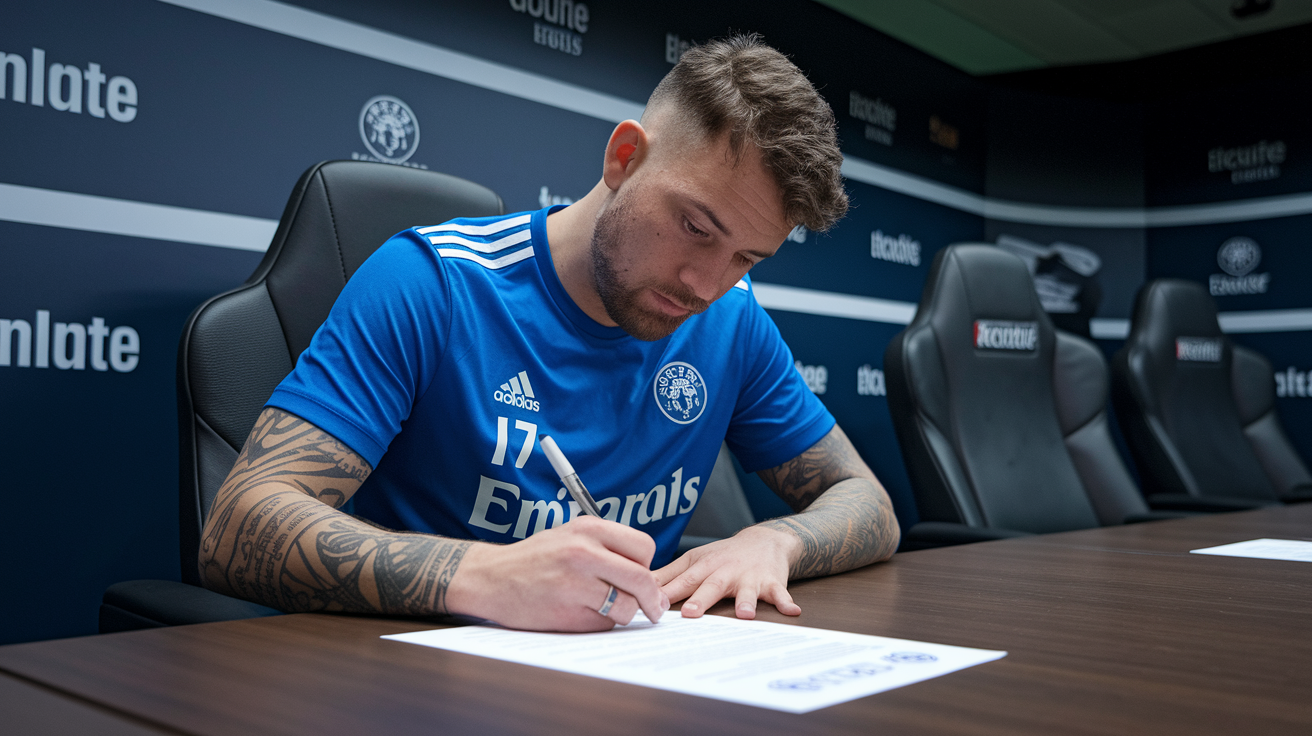

Think Deadline Day is just chaos and hype?
It’s the last chance for Premier League clubs to register new players before the window slams shut at 23:00 UK time.
Everything — medicals, signed contracts, registration files — has to be in, or the deal dies.
There’s one lifeline: the deal sheet, filed before the cut-off, which buys two hours to finish paperwork.
This guide explains the deadline clock, the Premier League portal, FIFA’s Transfer Matching System, and the real consequences when a transfer misses the cut-off.
How Transfer Deadline Day Works (Quick Explanation)

Transfer Deadline Day is the last shot Premier League clubs get to register new players before the window slams shut. Everything needs to be in. Medical checks, signed contracts, registration paperwork, the lot. And it all has to reach the Premier League before the official cut-off, which is usually 23:00 UK time. Miss that, and the deal’s dead.
Clubs are scrambling to agree fees, lock down personal terms, and fire documents into the league’s registration system before the clock hits zero.
If a club’s cutting it close, there’s a lifeline: the deal sheet. You submit a deal sheet to the Premier League before the deadline, and you get an extra two hours to finish everything. Contracts, medicals, the final bits. As long as the deal sheet’s logged on time, the transfer can still go through even if the paperwork lands after 23:00.
Once the Premier League approves the registration, the player’s good to go. No approval? No valid deal sheet? The transfer fails. Player stays where they are or can’t sign until the next window.
What clubs are doing on deadline day:
- Agreeing a transfer fee or loan terms with the selling club
- Sorting personal terms and contracts with the player
- Getting the medical done
- Submitting registration docs to the Premier League (or filing a deal sheet if they’re running out of time)
- Waiting for Premier League confirmation that the player’s registered and eligible
Key Deadlines and Timing Rules

Premier League windows run on a calendar set by FIFA and lined up with the big European leagues. Summer window usually opens mid-June, closes on the last day of August. Winter window covers January, shuts on the first of February. Domestic and international deadlines match up so clubs across Europe are all playing by the same rules.
The 23:00 UK cut-off exists so league officials have a hard stop for processing registrations. Clubs know if it’s not submitted or protected by a deal sheet before 23:00, it’s getting rejected. International transfers add another wrinkle. FIFA’s Transfer Matching System also needs to receive and clear docs by midnight for global compliance, but the Premier League’s 23:00 deadline is still the one that decides whether a player can register in England.
How Transfers Are Registered and Approved

Every domestic transfer needs Premier League approval before the player can show up in a matchday squad. Clubs upload signed contracts, proof the medical’s done, and the transfer or loan docs to the league’s online portal. The Premier League’s registration team checks everything, makes sure it lines up with Financial Fair Play and squad rules, then issues clearance. Player’s on the official squad list.
International transfers need an extra step through FIFA’s Transfer Matching System. Both the selling and buying clubs’ national associations have to log the transfer in TMS and swap an International Transfer Certificate. That’s a digital clearance confirming the player’s free to leave one association and join another. No TMS approval, no ITC from the player’s old federation? Premier League can’t complete registration, even if all the domestic paperwork’s ready.
When time’s tight, clubs file a deal sheet before 23:00. That reserves their spot in the approval queue and gives them a two-hour window to submit the full contract, medical records, whatever’s missing. The Premier League then treats the completed file like it arrived on time. Deals that were agreed in principle but not fully documented can survive the cut-off.
Domestic vs International Transfers on Deadline Day

Domestic deals move quicker because they skip TMS and the whole ITC dance. A Premier League club buying from another English club just needs to agree terms, finish the medical, and get docs into the Premier League’s portal. As long as it’s all in before 23:00 or protected by a deal sheet, the league can turn it around in hours once they review the file.
International deals depend on two football associations and FIFA’s central system playing nice. The selling club’s federation has to release the ITC. The buying club’s federation has to accept it. Both sides log matching records in TMS. Delays happen when office hours don’t line up with UK time, when there’s an error in the paperwork, or when the selling club disputes something. Even a small admin mess-up can shove an international deal past the deadline if the club didn’t protect it with a deal sheet. Player’s stuck until the next window.
Special Cases: Loans, Emergency Rules, and Youth Transfers

Loan deals follow the same deadline and registration process as permanent transfers, but the paperwork’s a bit different. Clubs file a loan agreement instead of a purchase contract. Both the parent club and the borrowing club have to sign off on wages, recall clauses, playing time. Domestic loans register through the Premier League portal. International loans need TMS and ITC clearance, same as permanent moves.
Emergency loan windows used to exist. Clubs could sign goalkeepers outside the transfer window if injury or suspension left them without cover. Premier League scrapped that in 2015. Can’t register emergency loans mid-season anymore. Free agents are different. Players who were unattached before the window closed can still be signed outside it, because there’s no transfer between clubs. The league processes their registration as a new contract.
Youth transfers operate under academy compensation rules and have to meet strict age and education requirements. Clubs signing players under 18 from another English academy pay a tribunal-set fee if they can’t agree on compensation. International youth signings face tighter restrictions. FIFA limits cross-border transfers of minors unless the player’s family is moving for non-football reasons or the move fits defined exceptions. Even on deadline day, youth deals need extra safeguarding and education docs before the Premier League or FIFA will approve registration.
What Happens If a Deal Misses the Deadline

Deals submitted after 23:00 without a valid deal sheet filed before the cut-off get rejected. The Premier League’s registration system locks at the deadline. Any late paperwork gets sent back to the club. The player stays registered to their old club or becomes a free agent if their contract ran out. Can’t join the buying club until the next window.
Why deals collapse in the final minutes: incomplete medicals, unsigned contract clauses, delays getting the ITC from the selling federation. Clubs sometimes argue technical issues or server errors caused the late submission, but the Premier League rarely gives exceptions unless they can verify a system failure on their end. For the player, a missed deadline usually means staying put for at least another five months. For the buying club, it can wreck squad plans and force emergency adjustments until January or next summer.
Final Words
In the thick of deadline day, everything comes down to timing and paperwork — the clock, medicals, registrations, and sometimes a deal sheet.
This piece ran through the 23:00 cut‑off, how clubs negotiate and submit deals, and why domestic and international moves follow different tracks.
Premier League transfer deadline day explained sums it up: get the registration in, clear TMS when needed, or wait for the next window. It’s tense, sometimes messy, and exactly the kind of chaos that keeps the season interesting.
FAQ
Q: How does transfer deadline day work and what happened on transfer deadline day?
A: Transfer deadline day works as the final cutoff for the transfer window: clubs negotiate deals, complete medicals and contracts, then submit registration paperwork before the cut-off for approval.
Q: Why do so many transfers happen on deadline day?
A: Many transfers happen on deadline day because clubs wait to squeeze better deals, resolve linked moves, use bargaining leverage, or react to late injuries and opportunities before the window shuts.
Q: Can players be announced after deadline day?
A: Players can be announced after deadline day if their paperwork was submitted before the cutoff (or an approved deal sheet filed); otherwise registration and match eligibility wait until the next window.