

Is the NFL’s injured reserve a medical tool or a roster cheat code?
Between the four-game minimum and eight return slots, IR rules force teams into tough roster math.
Put a player on IR and you free a 53-man spot, but you still eat his cap hit and burn a return designation when he comes back.
This post shows how those limits shape who teams keep, who they stash on the practice squad, and when front offices time moves to gain a season-long edge.
Core NFL IR Rules and Their Direct Roster Effects

When the NFL puts a player on injured reserve, it’s not just a medical designation. It’s a roster move with real consequences. The player can’t practice or play for at least four games, starting from the week he’s placed on IR. So if you move someone to IR before Week 1, he’s out until Week 5 at the earliest. Teams get eight return slots per season. Each player can be brought back twice, and both times count against those eight slots.
Short-term IR and season-ending IR aren’t the same thing. Short-term is for guys who need more than three weeks but should be back eventually. Season-ending IR usually means something catastrophic—ACL tears, major surgeries, or the worst timing mistake a team can make: placing a player on IR before the 4:01 p.m. ET cutdown deadline. Do that and the player’s done for the year, no exceptions. Once someone hits IR, he’s off the 53-man roster. That opens a spot for someone healthy. But the cap hit stays put.
Here’s what that means in practice:
-
Roster spot liberation – IR frees up one of those 53 spots immediately. You can sign a free agent, promote from the practice squad, or activate someone else without cutting anybody.
-
Return limitations – You’ve got eight total return designations to work with. Use them wisely, because bringing the same guy back twice eats two slots.
-
Cap considerations – IR doesn’t give you cap relief. The full hit stays on the books. You’re paying the guy whether he’s playing or not.
-
Injury-risk decisions – Is a borderline injury worth missing four games minimum? Or do you just list him inactive for a week or two and keep your options open?
-
Designation tracking – Someone in the front office better be counting. Run out of return slots in November and you’re stuck when it matters most.
Strategic Use of IR in Building and Maintaining the 53-Man Roster

Teams don’t just use IR when someone gets hurt. They use it to build rosters. Put a fringe guy with a tweaked hamstring on IR, sign a healthy body to replace him, and you’ve bought yourself flexibility. If the injured player heals faster than expected or injuries pile up at his position, you bring him back. If not, you’ve got a healthy contributor in his spot and nothing lost.
This works especially well at thin positions. Got two tight ends on the roster and one pulls a calf muscle? IR him, sign a veteran for a few weeks, and see what happens. If the original guy comes back strong in Week 8, great. If not, you haven’t lost him to waivers.
IR also protects veterans. A vet with guaranteed money and a nagging injury can go on IR instead of getting released. No waiver risk, no contract headaches. Coaches weigh the immediate need for bodies on Sunday against the long-term value of a guy who might help in December. The eight-designation cap forces you to pick your spots. Which injuries are worth a return slot? Which players aren’t coming back anyway?
Common ways teams use IR:
- Creating emergency depth – IR someone to sign a quick replacement, then bring the original guy back when the crisis passes.
- Managing fringe roster players – Keep a developmental prospect under contract without burning a 53-man spot.
- Balancing positional shortages – If you enter the season light at a position, an IR move forces you to add someone immediately.
- Protecting veterans – Stash an injured vet on IR rather than cutting him and dealing with the fallout.
Timing Decisions: When Teams Choose to Place a Player on IR

When you pull the trigger on an IR move matters as much as the move itself. The cutdown deadline—4:01 p.m. ET on cut-down day—is the dividing line. Anyone placed on IR before that deadline is automatically out for the season. Doesn’t matter if he’s got a mild ankle sprain or a broken leg. He’s done.
So teams get creative. Carry the injured guy through cutdown even if it costs you a roster spot for 24 hours. Then move him to IR the next day and preserve the return option. It’s a small sacrifice for a big payoff.
Medical timelines drive these calls. Five to eight weeks? Short-term IR makes sense. Three to four weeks? Maybe you keep him active and list him inactive on game days. That way you don’t burn a return slot and you avoid the four-game minimum. Positional depth matters too. Contenders facing a brutal early schedule might IR someone immediately to maximize flexibility. Rebuilding teams might wait to extend their evaluation window.
Case Studies of Teams Maximizing IR Rules

Playoff teams often IR high-value players early, knowing they’ve got eight slots and can bring guys back for December and January. You carry extra depth early, then reintegrate key contributors when the stakes rise. Rebuilding teams flip the script. They IR fringe vets to open spots for younger players and practice squad callups. It’s a way to cycle through more bodies without losing contractual control of guys who might still have trade value.
The eight-designation limit applies to everyone. But how you use those slots separates smart front offices from sloppy ones.
| Team | Season | IR Strategy Used | Outcome |
|---|---|---|---|
| Playoff Contender A | 2023 | Placed three starters on IR early, returned all three by Week 12; used remaining slots for depth players | Maintained roster depth through midseason injuries; all three starters contributed in playoff run |
| Rebuilding Team B | 2024 | Used IR to cycle veterans and evaluate practice squad promotions; prioritized young players for active roster spots | Auditioned 12 additional players over 17 games; identified two future starters |
| Contender C | 2022 | Delayed IR placement until after cutdown; preserved return eligibility for borderline injuries | Brought back four players who contributed in divisional round; avoided season-ending designations |
| Team D | 2025 | Overused IR early; exhausted return slots by Week 9; forced to release players who later recovered | Lost two contributors to waivers; finished with depleted depth in December |
How General Managers Use IR Rules to Gain Competitive Advantage
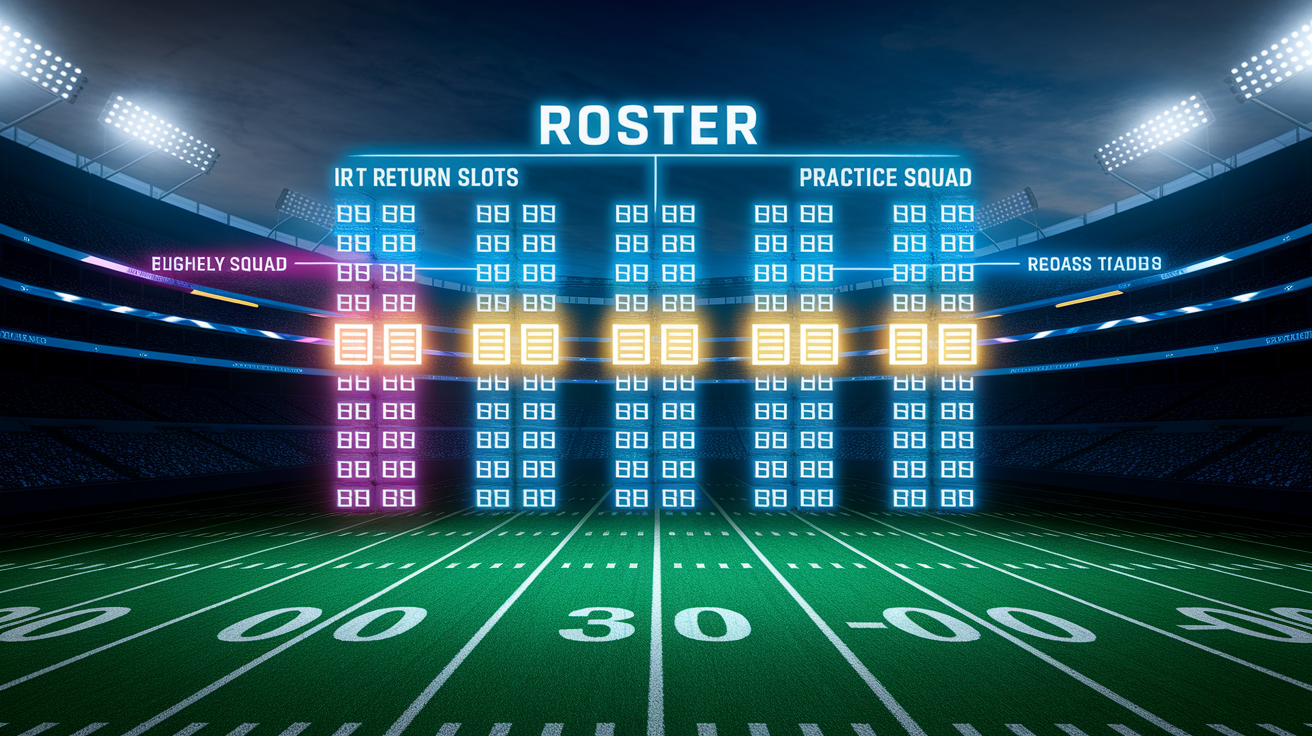
General managers treat IR like a roster cheat code. It frees an active spot while keeping the player under contract and on the cap. You can effectively run more than 53 players by cycling healthy replacements in and out as injured guys recover. Your roster becomes dynamic instead of static. Week to week, you adjust based on health, matchups, and who’s developing faster than expected.
IR decisions also tie into practice squad management. You’ve got 16 practice squad spots, and you can elevate guys up to three times per season without signing them to the 53. GMs balance those elevations against IR returns. Practice squad callups handle one-week emergencies. IR returns are for multi-week contributors. The three-tier system—53-man roster, practice squad, IR—lets front offices maximize talent without hitting roster limits or exposing valuable players to waivers.
Distinguishing IR Moves from Practice Squad Elevations
Practice squad elevations and IR returns aren’t interchangeable. An elevation gets a player onto the game-day roster for one week. He reverts to the practice squad after the game automatically. No waivers, no paperwork. You can elevate the same guy three times. After that, he’s either signed to the 53 or released. Elevations are immediate and perfect for covering short-term injuries, bye weeks, or matchup-specific needs. Need a blocking tight end for a run-heavy game plan? Elevate one for Sunday and send him back Monday.
IR returns are different. Four-game minimum. One of your eight return slots. Multi-week recovery and practice window before the guy can play. IR is long-term roster management. Practice squad elevations are tactical adjustments.
Recent Adjustments to NFL IR and Roster Flexibility Policies

NFL IR rules have changed a lot over the past decade. Before 2012, IR meant done for the season. No exceptions. The 2012 rule change introduced one return designation, and the player had to miss eight weeks. That limit expanded slowly. By 2020, teams could bring back three players. The 2021 COVID rules temporarily allowed unlimited returns for guys who missed at least three games and were placed on IR after the final cutdown.
The 2022 rule package was the biggest shift. Minimum IR absence dropped from eight games to four. Return cap jumped from three to eight. And individual players could now be designated to return twice in one season. The league was trying to balance competitive fairness with injury management. Teams could bring back more players without sacrificing legitimate recoveries for roster gamesmanship. And the four-game minimum kept IR from becoming a short-term stash for healthy guys.
These changes reshaped team planning. Front offices now expect to use most or all eight return slots. The four-game minimum made short-term IR a real alternative to carrying inactive players on the 53. The two-designation rule helps teams manage recurring injuries, especially soft-tissue issues that flare up multiple times. As injury rates keep climbing, more adjustments are probably coming. Some teams want expanded return limits or shorter minimum timelines to better match modern sports medicine.
Final Words
In the action, we broke down core IR rules, short-term vs season-ending, the four-game minimum, and how placing a player on IR frees an active roster spot.
We mapped how teams use timing and designations, plus case studies showing GMs leaning on IR to protect players and manage depth.
Bottom line, knowing how NFL injured reserve (IR) rules affect roster strategy changes how you read depth charts, fantasy moves, and front office choices. Keep watching designation limits and timing, it can swing a roster. That’s a win for fans who like to stay a step ahead.
FAQ
Q: What is the most eaten snack in the NFL?
A: The most eaten snack in the NFL is widely reported to be peanuts, especially as a stadium concession favorite, though official league-wide sales data isn’t publicly confirmed.
Q: What’s the benefit of putting players on injured reserve over not putting them on IR?
A: Putting players on injured reserve benefits teams by freeing an active roster spot, allowing longer recovery without rushing a return, and providing flexibility to sign an immediate replacement.
Q: Do NFL players on IR take up a roster spot?
A: NFL players on IR do not count against the 53-man active roster, freeing that spot; they remain under contract and must meet return rules before rejoining active duty.
Q: Do NFL players get paid when they are on the injured reserve list?
A: NFL players on injured reserve get paid according to their contract guarantees and continue accruing service time; exact pay depends on guarantees, injury settlements, or team decisions.