


Think starting a “Questionable” star this week is a bold move?
It’s not, it’s a bet you often lose.
Questionable or Doubtful tags cut fantasy output roughly 18–20% on average, and different injuries hit positions in different ways.
This guide shows how injuries affect weekly fantasy football rankings and, more importantly, what smart roster moves to make — when to bench, when to stash a handcuff, when to chase a waiver target.
Read on to learn simple, rule-of-thumb shifts that save your week.
Immediate Weekly Ranking Impact from Injuries

When an injury designation hits the official team report, fantasy managers need to know exactly how far that player drops in weekly rankings. Players marked “Questionable” or “Doubtful” lose 18–20% of their fantasy output on average compared to healthy games. “Questionable” means about a coin flip on availability. “Doubtful” means you’re probably looking at a scratch. That production hit moves rankings in real terms: your borderline RB1/RB2 slides into RB2/RB3 range, and a mid-tier WR2 turns into a dice roll at flex.
Position-wide numbers show running backs, wide receivers and tight ends drop 8–10% whenever they land on the injury report, no matter the tag. Severity pushes that further. Hamstring injuries tagged “Questionable/Doubtful” cost WRs and RBs 12–14% of their output, ankle issues knock off around 11%, and knee problems bring 11–16% declines depending on what’s compromised. These aren’t vague percentages. They translate to fewer touches, lower yards per carry, worse catch rates and vanished red-zone work. All of which means your rankings need to drop one or two tiers before Sunday.
Practice participation creates late-week ranking swings that dictate final start/sit calls. A player who goes DNP (Did Not Practice) Wednesday and Thursday but logs LP (Limited Participation) Friday usually climbs back up in rankings by Friday night. A Thursday LP that downgrades to Friday DNP triggers an urgent drop. Tracking this progression through the week lets managers pivot before the critical windows close: Sunday at 11:47 AM for the afternoon slate, Thursday afternoons for primetime.
Key injury-to-ranking triggers:
- Friday DNP after mid-week participation – drop two tiers, activate handcuff in rankings
- Saturday downgrade to “Doubtful” – pull from weekly RB/WR/TE top 24, prioritize waiver pivot
- Announced snap-count limit (like “25–30 snaps max”) – cut ranking by 30–40%, avoid in cash DFS
- Late-week LP after two DNPs – cautious one-tier bump, still apply ~10–15% haircut
- Mid-week IR designation – instant removal from all weekly ranks, bump primary backup 30–60%
Understanding and Interpreting Modern Injury Designations

Injury tags now cover a wider severity range than ever. The NFL killed the “Probable” designation back in 2016. Teams used to mark players with roughly 75% likelihood as “Probable,” but that tag’s gone. Now any player with a real ailment lands under “Questionable,” which historically meant a 50% shot to play. This forces managers to treat all “Questionable” tags as potentially serious, applying those averaged decline percentages (the 18–20% production drop) until practice reports clarify things. When a player logs full practice participation late in the week, Thursday or Friday, he probably would’ve been labeled “Probable” under the old system. Lower severity, smaller ranking adjustment.
The ambiguity baked into “Questionable” listings creates volatility. A player who practiced fully Friday is a completely different proposition than one who stayed limited all week, yet both wear the same tag on Sunday’s official report. Managers should look past the designation itself and focus on three signals: total practice participation (DNP vs LP vs FP across the week), in-game role restrictions mentioned by coaches (snap count, route limits, series rotations), and the injury’s body part plus recurrence history. When these signals conflict, say a hamstring-tagged receiver who practices fully Friday, use the most recent practice status to separate old “Probable” cases from true “Questionable” risks and move rankings accordingly.
| Designation | Severity Interpretation | Key Signals to Monitor |
|---|---|---|
| Healthy / Full Practice | No material ranking impact | Three consecutive FP sessions, no snap-count mention |
| Questionable | Wide range: ~10–25% production risk | Practice trend (DNP→LP→FP vs. all LP), body part type, coaching comments on usage |
| Doubtful | High chance of absence or severely limited role | Friday DNP or downgrade, explicit “game-time decision” language, activate handcuff |
| Out / IR | Confirmed absence, remove from weekly rankings | Official ruling, promote backup immediately, check return timeline |
Injury-Type Breakdown and Weekly Ranking Adjustments
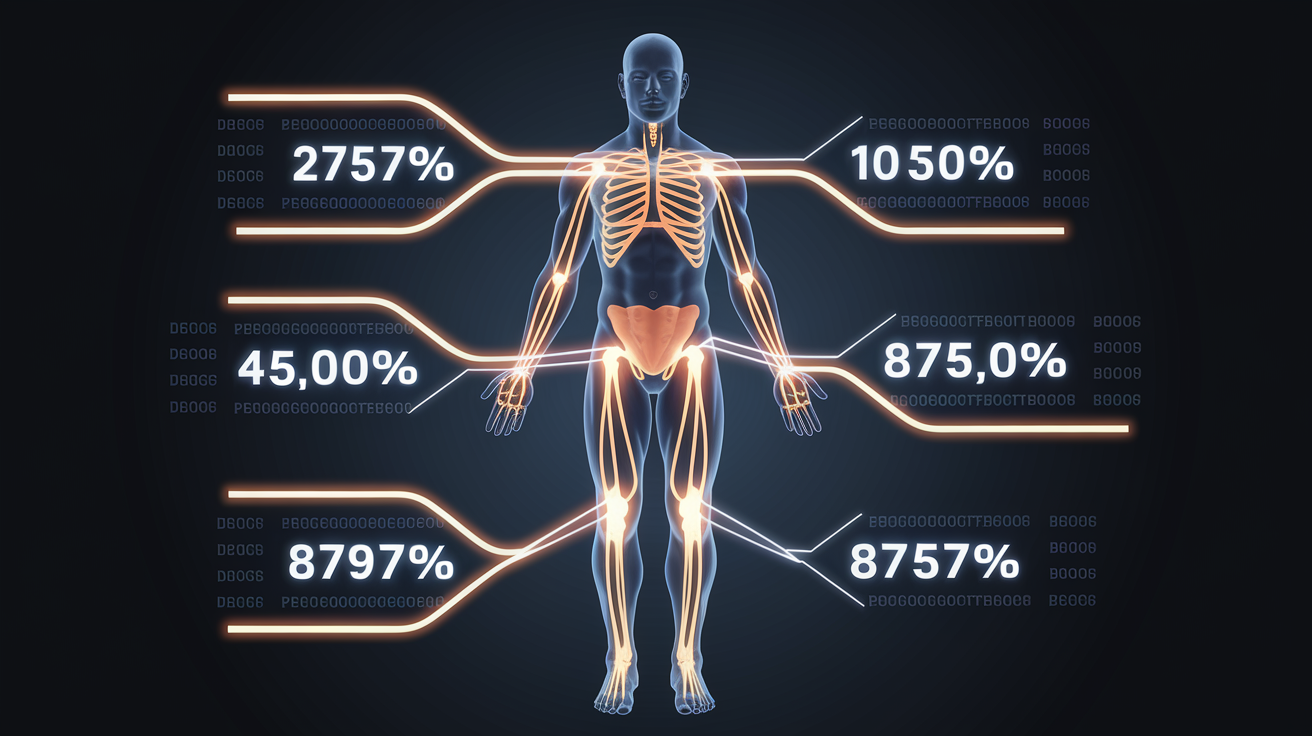
Soft-tissue injuries (hamstrings, groins, calf strains) carry the highest re-injury risk and often trigger snap-count caps even when a player suits up. Running backs and wide receivers dealing with hamstring issues tagged “Questionable/Doubtful” lose 12–14% of their fantasy output on average. The decline stems from both reduced workload and lost explosiveness on change-of-direction plays. Expect fewer deep routes for receivers and shorter gains for backs. Borderline WR2s slide into WR3/flex territory, RB2s become low-floor gambles. Hamstrings also recur at higher rates. If a player returns after just one week on the report, cautious ranking treatment (one tier below normal) protects against in-game aggravations that end their day early.
Body part data reveals where the biggest ranking drops land. Ankle injuries cut running back production by roughly 11% (rushing attempts down 9.3%, yards per carry falling 4.0%). Wide receivers lose 11.8% on average and see targets drop 8.4%, catch rates fall 9.2%, yards per reception decline 6.2%. Knee injuries hit harder. Running backs drop 11.9% overall, expanding to 16.6% when listed “Questionable/Doubtful.” Wide receivers with knee tags see no hit when “Probable” but lose 11.5% under “Questionable/Doubtful” status. Foot injuries wreck receivers especially hard: 19.3% production decline overall, brutal 25.3% drop in the 44-instance “Questionable” sample, driven by sharp losses in yards per reception (−4.7%) and catch rate (−9.1%). Tight ends with ankle injuries face the steepest drop, 27.3% when listed “Questionable/Doubtful,” making them priority downgrades in weekly rankings.
Small-sample injuries often show extreme volatility but still inform ranking calls. Wide receivers returning from concussions with a “Questionable/Doubtful” tag (18 instances in the data) saw targets plummet 23.6%. That’s a massive shift that turns a volume-based WR2 into an avoid. Illness tags, though less common (31 “Questionable/Doubtful” instances for WRs), led to 16.2% production declines and an 11.1% target drop with no efficiency loss. The player was simply less involved. When small-sample data shows consistent declines, apply the ranking adjustment even if confidence is lower. The risk of starting a player whose role shrinks by double digits outweighs ignoring limited evidence.
Quick injury-type ranking rules:
- Foot injury (WR) = Priority downgrade, move down two tiers, avoid in cash DFS
- Hamstring “Questionable” tag (RB/WR) = Apply 12–14% reduction, bench in cash games unless salary creates value
- Ankle injury (TE) = Major downgrade if “Doubtful” or limited practice, drop out of top 12 TE ranks
- Knee injury “Probable” replacement = Minimal adjustment, treat as healthy if full practice Friday
- Concussion “Questionable” (WR) = Extreme target-share risk, pivot unless no alternatives exist
- Toe injury (RB) = Large combined workload + efficiency drop (~19%), downgrade hard and prioritize backup
Positional Effects on Weekly Fantasy Football Rankings

Quarterback rankings rarely shift because of injury designations unless the ailment directly messes with throwing mechanics or mobility. Historical data shows no consistent production decline for QBs when listed on the injury report. Only when lower-body injuries compromise pocket movement or a throwing-shoulder issue limits arm strength do rankings drop meaningfully. Most “Questionable” quarterback tags relate to minor stuff that doesn’t impair passing volume or efficiency. Managers can hold steady on rankings unless practice reports or beat writers signal reduced velocity, altered release mechanics, or explicit snap-count limits. The floor stays stable, though ceiling plays may lose designed-run upside if a knee or ankle issue shelves scramble opportunities.
Running back and wide receiver rankings see the most frequent and dramatic shifts. Running backs lose roughly 8–10% baseline production when appearing on any injury report, climbing to 12–20% under “Questionable/Doubtful” tags depending on body part. That means workload declines. Carries fall 9–15% for ankle and hamstring injuries. Efficiency drops too, with yards per carry sliding 4–17% for foot and toe injuries. Wide receivers mirror this: 8–10% average decline across all injury tags, expanding to 12–19% for hamstring and foot injuries, with targets, catch rates and yards per reception all falling. These percentage drops force ranking adjustments down one to three tiers. A top-12 RB with an ankle injury and “Questionable” tag slides into the RB15–RB20 range. A borderline WR2 with a hamstring issue becomes a risky flex. Tight ends show similar baseline declines (8–10%) but suffer steeper drops for specific injuries, especially ankle issues under “Questionable/Doubtful” designations (−27.3%), making them priority downgrades in weekly TE rankings.
Replacement Player Behavior
Backup quarterbacks stepping into starting roles typically produce 15–25% fewer fantasy points than the injured starter. Conservative game plans lower pass volume, red-zone efficiency drops. Weekly rankings reflect this by bumping emergency QB starts into low-end QB2 or streamer territory unless the backup has proven starting experience and the matchup is elite. Backup running backs gain immediate ranking boosts (often 30–60% higher than their pre-injury ADP) when they inherit clear three-down roles, but initial rushing output averages 10–15% fewer yards per game than the starter because of decreased efficiency and occasional committee splits. Target share for wide receivers redistributes unevenly. The team’s secondary pass-catcher typically gains 60–70% of the injured starter’s target volume, which pushes that player’s ranking into WR2 or flex consideration. The remaining targets scatter across the depth chart and create volatile weekly floors. Replacement-player volatility means rankings for backups carry wider outcome ranges. Higher weekly ceiling if game script favors their role, lower floor if the offense stalls or the backup loses snaps to a committee.
Using Analytics and Injury Data to Adjust Weekly Rankings

Advanced metrics turn injury reports into measurable performance forecasts that refine weekly rankings beyond simple “in or out” decisions. Tools like DVOA (Defense-adjusted Value Over Average), WOPR (Weighted Opportunity Rating), PFF grades and NFL Next Gen Stats capture real-time changes in player effectiveness. Reduced top speed, lost separation on routes, lower explosive-play rates all signal ranking downgrades even when a player is officially active. A wide receiver who returns from a hamstring injury but shows a 5–10% drop in average separation per Next Gen tracking data should slide down weekly rankings by one tier. That lost separation means fewer open targets and a higher contested-catch rate. Injury analytics process mountains of play-by-play data and output probability scores, like a 68% chance a player exceeds his projection or a 42% likelihood of goal-line usage. They turn ambiguous “Questionable” tags into actionable start/sit guidance.
These metrics reshape how managers assign weekly ranks when injuries appear. Instead of benching every “Questionable” player, probability-based projections identify which injured players retain enough explosiveness, snap share and role clarity to justify lineup spots. A running back who practiced fully Friday and maintains his usual yards-before-contact average (tracked via PFF) stays in RB2 ranks despite an ankle tag. A receiver whose route participation drops from 85% to 65% (measured via snap-count tracking) falls from WR2 to flex. The goal is converting the binary “questionable” designation into a scaled ranking adjustment. Apply the body part specific percentage declines (11% for ankle, 12–14% for hamstring) and layer in real-time analytics to fine-tune where each player lands in the weekly top 24, top 36 or deeper tiers.
| Metric | What It Measures | How It Shifts Rankings |
|---|---|---|
| DVOA | Efficiency per play vs. league average, adjusted for opponent | When DVOA drops post-injury, reduce projection and move player down 1–2 ranks within tier |
| WOPR | Target share + air yards share combined into opportunity metric | Lower WOPR after injury = fewer high-value targets, downgrade WR rank by 3–5 spots |
| PFF Grade | Play-by-play performance grade (blocking, route-running, YAC, etc.) | Declining grade signals reduced effectiveness, apply percentage-based tier drop |
| Next Gen Stats | Speed, separation, route success rate, yards before/after contact | Speed/separation drops of 5–10% = move player down one full tier in weekly ranks |
Waiver Wire, Handcuffs, and Replacement Player Rankings

When a starter lands on injured reserve or gets a multi-week absence timeline, the primary backup’s ranking jumps 30–60% relative to pre-injury ADP. Often vaults from waiver-wire obscurity into weekly RB1 or RB2 status. This ranking boost depends on role clarity. Handcuffs who inherit three-down work and goal-line touches rise higher than committee backs splitting snaps. Depth-chart evaluation drives the new weekly rankings. Identify which backup has handled passing-down work in practice, who lines up in short-yardage sets, whether the coaching staff has a history of leaning on one back or rotating multiple options. A clear lead back with 70%+ snap share becomes a top-24 RB play. A timeshare situation keeps all involved backs in the flex-or-bust range. Aggressive waiver bidding is essential during multi-week injury windows. Roughly 30% of fantasy managers use the wire every week, and competition for proven replacements is immediate.
Wide receiver and tight end replacements follow a similar but less predictable pattern. When a top receiver misses time, the secondary pass-catcher typically absorbs 60–70% of the lost target share. Can elevate a fringe WR3 into weekly WR2 consideration if the offense maintains passing volume. Rankings adjust by checking target hierarchy over the previous three weeks, identifying which receiver runs the starter’s route tree (slot vs outside), monitoring quarterback chemistry from practice reports. Tight end replacements are volatile. If the backup has shown red-zone involvement, he enters streaming TE1 ranks (top 12). If not, he stays a desperation play. The key ranking factor is role definition. Replacements with clear usage patterns (snap share above 60%, consistent route participation, goal-line presence) earn confident weekly ranking slots. Ambiguous committees or unproven backups stay lower in the rankings until usage data confirms their fantasy viability.
Depth-chart monitoring creates early waiver advantages that shape weekly rankings before official injury designations appear. Track snap-count trends on Sundays. When a handcuff logs 8–10 snaps in relief during a blowout or goal-line series, note the usage pattern for future reference. Monitor beat-writer reports Tuesday through Thursday for practice participation. A backup running back taking first-team reps Wednesday signals potential ranking elevation even if the starter is only listed “Questionable.” Multi-week injury absences (the average significant injury lasts 3–6 weeks) require immediate waiver moves. Waiting until Sunday morning often means losing the best replacement to a higher waiver priority or faster-acting league mate. Prioritize handcuffs and replacements who show stable snap shares, clear goal-line roles, favorable upcoming matchups, low injury histories themselves. These factors determine whether a waiver add slots into weekly top-24 ranks or stays a speculative bench stash.
Five must-check waiver criteria before adjusting rankings:
- Snap share trend – Replacement must show 60%+ share over two games to enter top-36 ranks
- Goal-line role – Backs with red-zone touches in relief gain RB2 upside, those without stay flex-range
- Target hierarchy – WRs moving into top-3 target volume earn WR2/WR3 ranks, fourth or lower stay borderline
- Matchup slate – Next three opponents’ defensive rankings (run/pass DVOA) determine floor/ceiling in weekly ranks
- Durability and prior injury – Avoid replacements with soft-tissue issues in previous four weeks, rank them lower
Short-Term vs Long-Term Injury Impact on Weekly Rankings
Short-term injuries (those expected to sideline a player for one to three weeks) create immediate weekly ranking volatility but let managers hold the player on bench or IR and plan for his return. When a running back or receiver is ruled “Out” for Week 6 with a minor ankle sprain and a probable Week 7 return, rankings pull him from that week’s top 36 entirely and promote his backup into starting territory. But the injured player stays rosterable because his return will restore prior ranking levels. The key decision point is whether to use a bench spot or an IR slot. If league rules permit IR stashing for “Out” designations, move the player there and free the roster spot for a streamer or waiver claim. Multi-week absence windows (3–6 weeks) require more aggressive backup acquisition. Prioritize waiver adds who offer three-plus weeks of starting value. Replacing three weeks of production matters more than speculating on long-shot lottery tickets.
Long-term injuries (ACL tears, Achilles ruptures, meniscus surgeries, fractured bones with undefined return timelines) force immediate removal from all weekly rankings and season-long valuation. These injuries carry structural damage that wipes out the player’s current-year fantasy relevance. Drop them from active rosters unless keeper or dynasty formats apply. The ranking impact extends beyond the injured player. When a star running back lands on season-ending IR, his backup’s rankings shift permanently upward for the rest of the season, often into every-week RB1/RB2 status. Historical data shows players returning healthy after extended injury absences can outperform their injury-suppressed averages from earlier in the season. If a receiver played hurt for four weeks (posting 40% lower output) and then heals, his post-return ranking should reflect his healthy baseline rather than the depressed mid-season numbers. Long-term injuries also create durability red flags for future seasons. Dynasty and keeper rankings factor in increased re-injury risk and potential long-term effectiveness declines for players with ACL or Achilles history.
Key IR and designation-change factors:
- IR-eligible rules – Confirm league settings, stash “Out” players on IR to free active roster spots for waiver replacements
- Designation-change timing – Monitor Friday/Saturday upgrades, players moving from “Doubtful” to “Questionable” late often play and reclaim prior weekly ranks
- Expected return windows – 1–2 weeks = hold on bench, 3–6 weeks = consider drop if roster crunch exists and wire options are strong, 6+ weeks or IR = drop in redraft
- Durability-based volatility – Players with two+ soft-tissue injuries in a season carry ranking risk even when healthy, downgrade by 5–10% rest-of-season
Case Studies Illustrating Weekly Ranking Movement from Injuries
C.J. Anderson’s 2015 season shows how playing through injury suppresses weekly rankings and output. Anderson averaged 12.24 PPR points per game in weeks he was healthy and off the injury report. In games where he appeared on the report (often with ankle or toe issues) his production dropped to roughly half that baseline. His weekly rankings reflected this volatility. Healthy weeks placed him in the RB12–RB18 range. Injury-tagged weeks pushed him outside the top 24 and into flex-or-bench territory. Managers who applied the injury-specific percentage declines (ankle = −11%, toe = −19%) and monitored practice participation could predict which weeks to pivot away from Anderson, avoiding multiple single-digit point performances that sank lineups.
The 2024 season’s early attrition illustrated how league-wide injury waves reshape weekly rankings across multiple positions. Entering Week 3, only 82 of the top 100 players by average draft position remained active. Historically low durability rate that forced mass ranking reshuffles. High-profile cases included a starting quarterback’s torn Achilles (removing him from all weekly QB ranks and elevating his backup into streamer consideration), a rookie running back’s torn meniscus (opening the door for his handcuff to jump into top-20 RB ranks for multiple weeks), a star receiver’s shoulder issue that limited him to partial practice all week, dropping his ranking from WR8 to WR18 and making him a fade in cash-game DFS. Each injury created cascading ranking effects. When the starting QB went down, his team’s receivers also fell in rankings because of expected lower passing volume and reduced red-zone efficiency with the backup under center.
Small-sample but high-impact injuries reveal extreme ranking movement when the data is directionally clear. In 18 instances where wide receivers returned from concussions with “Questionable/Doubtful” tags, their target share dropped 23.6% compared to healthy games. Massive decline that turned WR2s into low-end WR3s or bench plays. One specific example involved a slot receiver who averaged 8.2 targets per game pre-concussion. In his first game back under a “Questionable” tag, he saw only 5.1 targets and produced 40% fewer fantasy points. Managers who ignored the small sample size and started him anyway absorbed lineup damage. Those who applied the 23.6% target-drop data and benched him in favor of a healthy replacement preserved their weekly score. Even with limited instances, the consistency of the decline (all 18 cases showed reduced involvement) justified the ranking downgrade.
-
Running back ankle sprain, Week 5 “Questionable” tag: Player ranked RB14 in preseason, healthy games through Week 4 placed him RB10–RB13 weekly. Ankle sprain Friday limited practice. Applied −11% ranking adjustment and moved him to RB18. Backup ranked outside top 36 pre-injury, elevated to RB22 for Week 5. Starter played but recorded 9.3% fewer carries and 4.0% lower YPC. His 8.7 PPR points validated the downgrade. Backup saw 35% snap share and posted RB28 finish.
-
Wide receiver hamstring injury, Week 8 “Questionable/Doubtful”: Preseason WR18, healthy weeks 1–7 averaged WR16 finish. Thursday DNP, Friday LP, listed “Questionable” Saturday. Applied −13.8% adjustment per hamstring Q/D data and dropped to WR28 in weekly ranks. Secondary receiver (preseason WR45) moved to WR32 based on expected 60–70% target-share absorption. Starter played limited snaps (58% vs usual 85%), caught 3-of-6 targets for 42 yards (WR40 finish). Replacement posted 6 targets, 4 catches, 68 yards (WR26).
-
Tight end ankle injury, Week 11 “Doubtful”: Preseason TE8, weeks 1–10 averaged TE10. Friday DNP after limited Thursday. Applied −27.3% TE ankle Q/D adjustment and removed from top-12 TE ranks entirely. Backup TE (waiver add, unranked preseason) elevated to TE14 weekly rank based on red-zone role history. Starter ruled out Sunday morning. Backup played 68% snaps, saw 5 targets, scored one TD, finished TE9 for the week.
Weekly Fantasy Ranking Checklist for Injury-Affected Lineups

Confirm official injury designations and practice participation by Thursday afternoon to allow time for waiver claims and trade talks before rosters lock. Check team injury reports Wednesday through Friday. Track each player’s practice status (DNP, LP, FP) across all three days and note any downgrades or upgrades in participation level. If a player goes from LP Wednesday to FP Thursday and Friday, treat him closer to healthy baseline and apply minimal ranking reduction (5–10% if any tag remains). If he moves from FP Wednesday to LP Friday, apply the full body part specific percentage decline (11% ankle, 12–14% hamstring) and downgrade rankings by one to two tiers. Sunday’s critical decision window at 11:47 AM requires all ranking pivots to be finalized. Set alerts for late-breaking inactive announcements and have backup options ready on your bench or wire.
Identify snap-count warnings and role restrictions mentioned in beat-writer reports or coaching press conferences. When a coach explicitly states a player will be on a “pitch count” or limited to “20–25 snaps,” apply a 30–40% projection reduction and move the player down two full tiers in weekly rankings. This turns RB1s into RB3/flex plays and WR2s into desperation options. Pre-plan lineup pivots by Wednesday. List your injured players, note their designations and practice trends, assign probability-weighted ranking adjustments, identify which waiver or bench replacements will start if the injury worsens. Having pivot options locked in by Thursday night cuts last-minute stress and ensures you grab the best available replacements before league mates react to Friday/Saturday news.
Use numerical reduction formulas to quantify ranking movement rather than relying on gut feel. Apply the 18–20% production decline for all “Questionable/Doubtful” designations as a baseline, then layer in body part specific data. Ankle injuries add another 11% drop for RBs/WRs, hamstring Q/D tags push the total decline to 12–14%, foot injuries (especially for WRs) mean 19–25% reductions. For backup quarterbacks, expect 15–25% fewer points than the injured starter and rank them accordingly (a QB8 starter’s backup becomes a QB18–QB22 streamer). Backup running backs who inherit three-down roles gain 30–60% ranking boosts. If a preseason RB40 steps into a clear lead role, move him into the RB18–RB24 range depending on matchup and offensive quality. Tight ends and wide receivers absorbing 60–70% of an injured starter’s target share rise by similar magnitudes. A WR50 can jump to WR28–WR32 if he’s the clear next man up in a pass-heavy offense.
Actionable weekly ranking checklist (7 steps):
- Wednesday AM: Pull official injury reports, note all DNP and LP tags for rostered players and key waiver targets
- Wednesday PM: Cross-reference practice participation with body part injury type, assign preliminary percentage-based ranking adjustments
- Thursday afternoon: Update practice logs, identify upgrades (LP→FP) and downgrades (FP→LP or LP→DNP), adjust rankings accordingly
- Thursday evening: Scan beat-writer reports and coaching quotes for snap-count limits, role changes, “game-time decision” language
- Friday AM: Lock in waiver claims for handcuffs and replacements if starter practice trend is negative (DNP or downgrade)
- Friday PM / Saturday AM: Finalize ranking tiers after Friday practice reports, move “Doubtful” players out of active lineups and promote replacements
- Sunday 11:00–11:47 AM (or Thursday 7:00–7:20 PM for TNF): Confirm inactive lists, execute last-minute lineup swaps based on final designations and pre-planned pivots
Final Words
Right in the action: a Questionable or Doubtful tag makes managers scramble, and those labels mean reduced chances of full snaps — which is why players slide in weekly ranks.
We showed the math: 8–10% average dip for skill players, ~18–20% for Q/D tags, body‑part specifics, and how DNP → LP → FP practice trends can flip decisions before lock. Plus position effects, waiver bumps, and handcuff plays.
Use the checklist and analytics to turn uncertainty into advantage; knowing how injuries affect weekly fantasy football rankings gives you cleaner, faster start/sit calls. Stay sharp, it pays off.
FAQ
Q: What injuries affect fantasy football?
A: The injuries that affect fantasy football are mainly soft‑tissue (hamstring/groin), ankle, knee, foot, concussion, shoulder and hand issues, plus QB lower‑body problems that limit throwing; watch body part and practice tags for impact.
Q: How serious is Tank Dell’s injury?
A: Tank Dell’s injury seriousness depends on official Texans reports and practice designations; monitor the team injury report, Friday practice status and any snap‑count limits for a clearer timeline and lineup impact.
Q: What happens if your player gets injured in FPL?
A: If your player gets injured in FPL, they stop contributing and must be replaced before the next gameweek deadline—use your bench, make a transfer, or deploy chips (free hit, wildcard) to cover the loss.
Q: Is injured reserve 4 games or 4 weeks?
A: Injured reserve requires a minimum four‑game absence, not four calendar weeks; players are eligible to return after missing four games under current NFL rules.