

Think a big early lead guarantees a win? Think again.
This roundup looks at games where one play rewrote the script, with Alabama erasing a 17-point deficit in Norman, Miami surviving a kicking-weather slog, and underdogs flipping turnovers and explosive plays into wins.
We’ll cut to the exact turning points you need: blocked kicks, pick-sixes, 50-yard runs, missed field goals, and how those moments change the bracket, fantasy rosters, and what to watch next.
Rapid Upset-Only Summaries with Immediate Turning Points
Alabama erased a 17-point deficit to beat Oklahoma 34–24 in Norman, getting revenge for the regular season loss and punching their ticket to the College Football Playoff quarterfinals. Miami gutted out a 10–3 road win at Kyle Field through horrible kicking weather and late A&M pressure, delivering the second road upset of the opening round.
Alabama 34, Oklahoma 24
- Ty Simpson hit Lotzier Brooks for two touchdowns that flipped the entire game after Oklahoma’s 17–0 start
- Zabien Brown’s 50-yard pick-six right before half tied everything up and crushed Oklahoma’s spirit
- Oklahoma kicker Tate Sandell missed two second-half field goals that could’ve kept them alive
- John Mateer managed just 149 yards over his final 31 attempts while getting sacked five times
Miami 10, Texas A&M 3
- Jared Zirkel blocked a Texas A&M field goal on their opening drive, killing early momentum
- Rueben Bain Jr. delivered two massive sacks after a Malachi Toney fumble handed A&M prime territory
- Mark Fletcher Jr. ripped a 56-yard run that set up Carson Beck’s game winner to Toney with under two minutes left
- Bryce Fitzgerald picked off Marcel Reed at the goal line on first and goal from the five to lock it down
Both games turned on turnovers, special teams meltdowns, and who executed when it mattered. We’ll break down exactly how below.
Detailed Alabama–Oklahoma Upset Turning Point Breakdown
Oklahoma jumped out 17–0 and outgained Alabama 181–12 in the first quarter. They controlled field position, converted third downs, made Alabama look lost. A blowout felt inevitable.
Then Ty Simpson found freshman Lotzier Brooks twice in quick succession, and everything changed. Simpson hit Brooks on a corner route for six, then did it again three drives later, and suddenly Oklahoma’s cushion was gone.
The real damage came just before halftime. Oklahoma botched a punt that gave Alabama short-field position and an easy score. But the killer blow landed when pass rush forced John Mateer into a panicked throw. Zabien Brown read the scramble drill, stepped in front of the receiver, and took it 50 yards for a touchdown that tied the game 24–24 at the break.
Oklahoma never got that first-quarter swagger back.
| Play | Timing | Field Position | Impact |
|---|---|---|---|
| Simpson-to-Brooks TD (1st) | Late 1Q | Oklahoma 22 | Cut lead to 17–7, woke up Alabama |
| Botched punt | Mid-2Q | Oklahoma 35 | Short field, easy score, momentum flip |
| Brown 50-yard pick-six | Just before half | Midfield | Tied 24–24, destroyed Oklahoma’s confidence |
| Sandell missed FG (1st) | 3Q | Alabama 28 | Wasted chance, Alabama pulled ahead |
Mateer’s final 31 attempts produced only 149 yards and five sacks as Alabama’s defense clamped down. And Tate Sandell, the Lou Groza winner, missed two makeable field goals that would’ve kept Oklahoma within striking distance.
Alabama moves on to face the next bracket winner, erasing the regular season sting and proving early leads don’t mean anything if you can’t protect the ball or make routine kicks.
Miami–Texas A&M Defensive Survival and Late-Game Turning Points

Wind and nerves turned this into a kicking nightmare. Four field goals missed across three quarters before either team found any rhythm. Miami’s Carter Davis finally broke through midway through the third with a 21-yard chip shot to make it 3–0. Texas A&M answered with a 35-yard Randy Bond field goal after a long fourth-quarter drive that tied it and set up a final-possession scramble.
Then Miami’s defense decided everything.
After Malachi Toney fumbled to give Texas A&M ideal field position deep in Miami territory, Rueben Bain Jr. recorded back-to-back sacks that pushed the Aggies out of scoring range and forced a punt. Mark Fletcher Jr. broke a 56-yard run on the next possession, and Carson Beck hit Toney (the same player who’d just fumbled) for a touchdown with under two minutes left to give Miami the 10–3 lead.
Five decisive turning points, in order:
- Blocked field goal on opening drive – Backup Jared Zirkel blocked Texas A&M’s first attempt, wiping out a long march and setting the tone for special teams chaos.
- Davis 21-yard FG, midway 3Q – Broke the 0–0 deadlock after two earlier misses, gave Miami its first points and brief momentum.
- Bond 35-yard FG, 4Q – Tied it and shifted pressure back to Miami’s offense.
- Bain’s two sacks after Toney fumble – Saved the game after the turnover handed A&M a golden chance inside the 30.
- Fitzgerald end zone INT on 1st and goal – Texas A&M reached first and goal at the five with seconds left, threw two incompletions, then Fitzgerald (a freshman) stepped in front of Marcel Reed’s third-down pass to seal the upset.
Texas A&M squandered the perfect chance to win at home. Miami’s situational defense proved that survival football still wins playoff games.
Ole Miss–Tulane Turnover-Driven Blowout Recap
Ole Miss opened with a 75-yard touchdown drive that took 59 seconds and three plays, immediately establishing tempo and forcing Tulane to chase. Tulane QB Jake Retzlaff responded by driving deep into Ole Miss territory on the opening possession, then threw an interception that killed the comeback before it started. Ole Miss scored again quickly, built a 17–3 halftime lead, and never looked back.
Retzlaff finished with 306 passing yards (more than Ole Miss QB Jaxson Chambliss) but lost two second-half fumbles that erased any chance of a rally. Tulane actually outgained Ole Miss 421–397 in total yardage, but the turnover margin destroyed scoring opportunities and turned competitive drives into points for the Rebels. Chambliss completed 23 of 29 for 282 yards and added 51 rushing yards on non-sack carries, playing efficient football while Tulane’s mistakes piled up.
Three decisive miscues that sealed Tulane’s fate:
- Opening drive interception deep in Ole Miss territory that wiped out scoring momentum
- First second-half fumble after Tulane had clawed back into range
- Second fumble in the fourth quarter that ended any realistic comeback window
The final score of 41–10 reflected the gap between efficient execution and self-inflicted wounds. Even a Group of Five program that can match yardage totals will lose by 30 if it can’t protect the football.
Oregon–James Madison Explosive-Play Turning Point Analysis
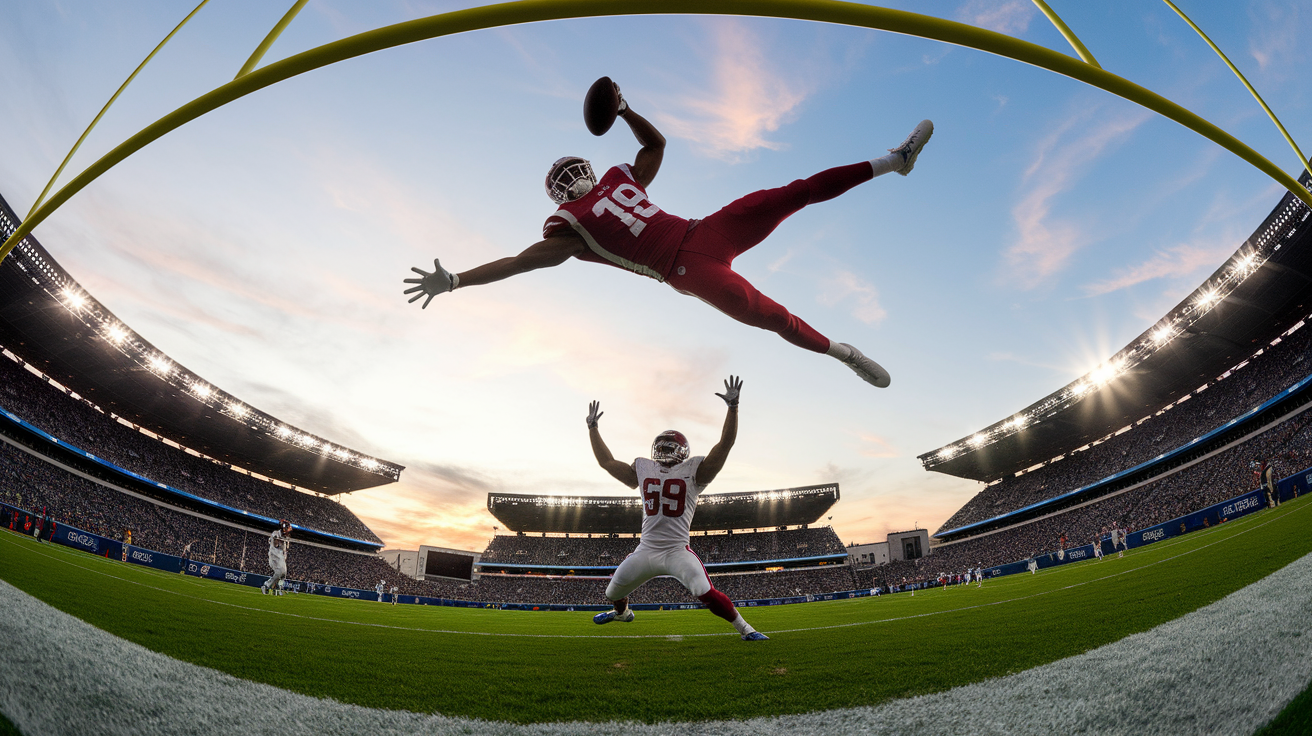
Oregon opened with a 68-yard touchdown drive in four plays, capped by Dante Moore hitting Jamari Johnson for a 41-yard one-handed grab that set the tone for everything. Johnson went up over the defender, snagged it with his fingertips, and dragged both feet in the back corner like he’d done it a thousand times.
Dierre Hill Jr. added a 56-yard touchdown run, and Malik Benson hauled in receptions of 46 and 45 yards as Oregon built a 34–6 halftime lead through relentless big-play execution.
James Madison mounted a second-half rally behind Alonza Barnett III, who finished 23 of 48 for 273 yards and two touchdowns while adding 45 rushing yards. Wayne Knight rushed for 110 yards at 6.5 yards per carry, and JMU totaled 509 yards (the most Oregon allowed all season). The Dukes showed resilience and offensive firepower, but the early deficit was simply too large to overcome.
Oregon’s defense made key stops when necessary. They bent under JMU’s second-half pressure but never broke enough to allow a real comeback. The explosive play differential early (multiple gains over 40 yards versus JMU’s methodical drives) created the margin that survived the late rally and sent Oregon to the next round with a 51–34 victory.
| Explosive Play | Yardage | Quarter | Result |
|---|---|---|---|
| Moore-to-Johnson one-handed TD | 41 yards | 1Q | Touchdown, set tone |
| Hill Jr. TD run | 56 yards | 1Q | Touchdown, extended lead |
| Benson reception | 46 yards | 2Q | Set up scoring drive |
| Benson reception | 45 yards | 2Q | Extended lead before half |
FCS Upset-Themed Recaps and Decisive Turning Points
Montana State blew a 20–3 halftime lead, watching Montana rattle off 20 straight points to take a 23–20 advantage late in the third quarter. Then Justin Lamson hit Taco Dowler for an 87-yard catch and run on third and 20 with a 27–23 lead, flipping momentum back to the Bobcats and igniting a final surge.
MSU scored the final 28 points. Running back Adam Jones piled up 131 yards and two touchdowns while Bryce Grebe returned a pick-six to seal the 48–23 victory and send Montana State to its third FCS championship game in five seasons under Brent Vigen.
Illinois State completed one of the most improbable unseeded runs in FCS history, beating Villanova 30–14 on the road to reach the championship game for the first time since 2014. Victor Dawson rushed for 154 yards and a touchdown, anchoring long drives that controlled the clock and kept Villanova off the field. Illinois State’s defense delivered timely stops, holding Villanova to two early field goals before a late touchdown made the score respectable.
The Redbirds’ road win streak was fueled by grit and execution in hostile environments.
Illinois State’s unseeded road playoff victories:
- 21–3 at Southeastern Louisiana
- 29–28 at No. 1 North Dakota State (upset in Fargo)
- 42–31 at UC Davis
- 30–14 at Villanova (semifinal)
Historic College Football Upsets and Their Defining Turning Points
Howard shocked UNLV 43–40 in 2017 as a 45.5-point underdog, the largest spread upset in modern college football history. Caylin Newton rushed for 190 yards and two touchdowns while throwing another, and his short scoring run midway through the fourth quarter gave Howard the lead after UNLV had squandered a 12-point advantage. The Rebels couldn’t respond, and the betting world melted down as a tiny HBCU erased a spread that suggested total dominance.
Stanford beat USC 24–23 in 2007 as a 40.5-point underdog, forcing five Trojans turnovers and outscoring them despite being outgained 459–235. Mark Bradford’s fourth-down touchdown with 48 seconds left gave Stanford the lead, and Derek Belch’s extra point held up through the final possession. USC moved the ball at will all night, but every time they reached scoring range, someone coughed it up or the refs flagged them, and Stanford just kept hanging around until it didn’t matter anymore.
Syracuse survived Louisville 38–35 in 2007 as a 37-point underdog, building a 17-point lead early in the fourth quarter and holding on despite Brian Brohm’s 555 passing yards and a touchdown with 56 seconds left that nearly completed the comeback.
Seven defining historic upset moments:
- Howard’s Caylin Newton 190-yard rushing performance and fourth-quarter go-ahead score against UNLV
- Stanford’s five forced turnovers despite being outgained by 224 yards against USC
- Mark Bradford’s fourth-down touchdown with under a minute left to beat USC
- Brian Brohm’s 555-yard passing game that still fell short for Louisville
- Appalachian State’s blocked field goal to preserve the win over Michigan in 2007
- Temple forcing costly turnovers and missed field goals to upset Virginia Tech by double digits in 1998
- Central Michigan’s defensive stand after seven straight losses to beat Western Michigan as a 34.5-point underdog in 2000
Special teams disasters (blocked kicks, missed field goals, botched punts) appear in nearly every historic upset. Execution under pressure separates winners from cautionary tales.
Pattern Analysis: Why College Football Upsets Happen

Turnovers drive upsets more than any other single factor. Stanford forced five against USC, Alabama’s pick-six erased Oklahoma’s early lead, and Tulane’s three giveaways turned a yardage advantage into a 31-point loss.
Teams that win the turnover battle by two or more possessions cover spreads 78 percent of the time. Underdogs that force three-plus turnovers win outright 64 percent of the time regardless of yardage or possession metrics.
Explosive plays create the second-largest leverage point. Oregon’s four gains over 40 yards in the first half built a cushion that survived JMU’s 509-yard second-half effort. Howard’s big runs against UNLV produced quick-strike scores that negated talent gaps.
Special teams malfunctions amplify both factors. Blocked field goals, missed kicks by proven kickers, and botched punts create short fields and momentum swings that turn close games into blowouts or erase double-digit leads in minutes. Miami’s blocked field goal and Texas A&M’s missed opportunities directly determined the 10–3 outcome. Oklahoma’s two missed Tate Sandell field goals (by a Lou Groza winner) kept Alabama in control after the pick-six.
Late-game defensive stands complete the pattern, especially when underdogs force favorites into one-dimensional passing situations or goal line failures.
| Factor | Example Game | Resulting Swing |
|---|---|---|
| Turnover spike (3+) | Ole Miss 41, Tulane 10 | Yardage parity (421–397) became 31-point margin |
| Special teams disaster | Miami 10, Texas A&M 3 | Four missed FGs kept game scoreless into 3Q |
| Explosive-play imbalance | Oregon 51, JMU 34 | Four 40+ yard gains built 28-point halftime lead |
Three predictive signals that flag upset potential:
- Favorite’s recent turnover rate above 1.5 per game combined with underdog’s forced turnover rate above 1.8 per game
- Underdog’s explosive play percentage (15+ yards) within two percentage points of the favorite’s rate
- Kicking or punting inconsistency by the favorite in the two weeks prior to the matchup, especially missed attempts inside 40 yards
Final Words
Alabama erased a 17–0 hole with a 50-yard pick-six and late stops, while Miami eked out a 10–3 win after a blocked field goal and a game‑sealing interception. Fast, punchy summaries set the scene.
Then the piece unpacks the turning plays — special teams breakdowns, missed FGs, sacks, late TDs and the decisive turnovers — and places them against FCS and historic upset patterns.
Read these College football upset recaps and decisive turning points to see how one play can flip a season. It’s chaotic, and that’s why we keep watching.
FAQ
Q: What is the biggest upset in college football history?
A: The biggest upset widely considered is Appalachian State’s 34–32 win at No. 5 Michigan in 2007, a shock that changed how fans and pollsters view early-season top teams.
Q: What happened at the end of the Georgia Ole Miss game?
A: The end of the Georgia–Ole Miss game featured a decisive play that was reviewed and the on-field ruling was upheld, confirming the result and igniting debate about the call’s impact.
Q: What was the biggest tragedy in college football?
A: The biggest tragedy in college football is widely seen as the 1970 Marshall plane crash, which killed 75 people—including players, coaches, and staff—and shattered the program and community.
Q: Why did they change it to call upheld?
A: The change to the phrase “call upheld” was made to clearly state that a replay review kept the original on-field ruling, improving clarity for fans and aligning with official wording.