

Think weather is just background noise for MLB bets? Think again.
Wind, temperature, and even barometric pressure shift home-run risk and total runs in ways bettors usually miss.
Match that with a starter’s fly-ball or ground-ball profile and you get clear edges for moneylines, totals, and props.
Today’s piece uses historical splits and short-term models to show which games have the biggest weather-driven edges.
Read on for data-backed picks, the key stats to watch before lock, and quick rules to turn forecasts into profitable bets.
Key Daily MLB Pitcher and Weather Impacts for Bettors
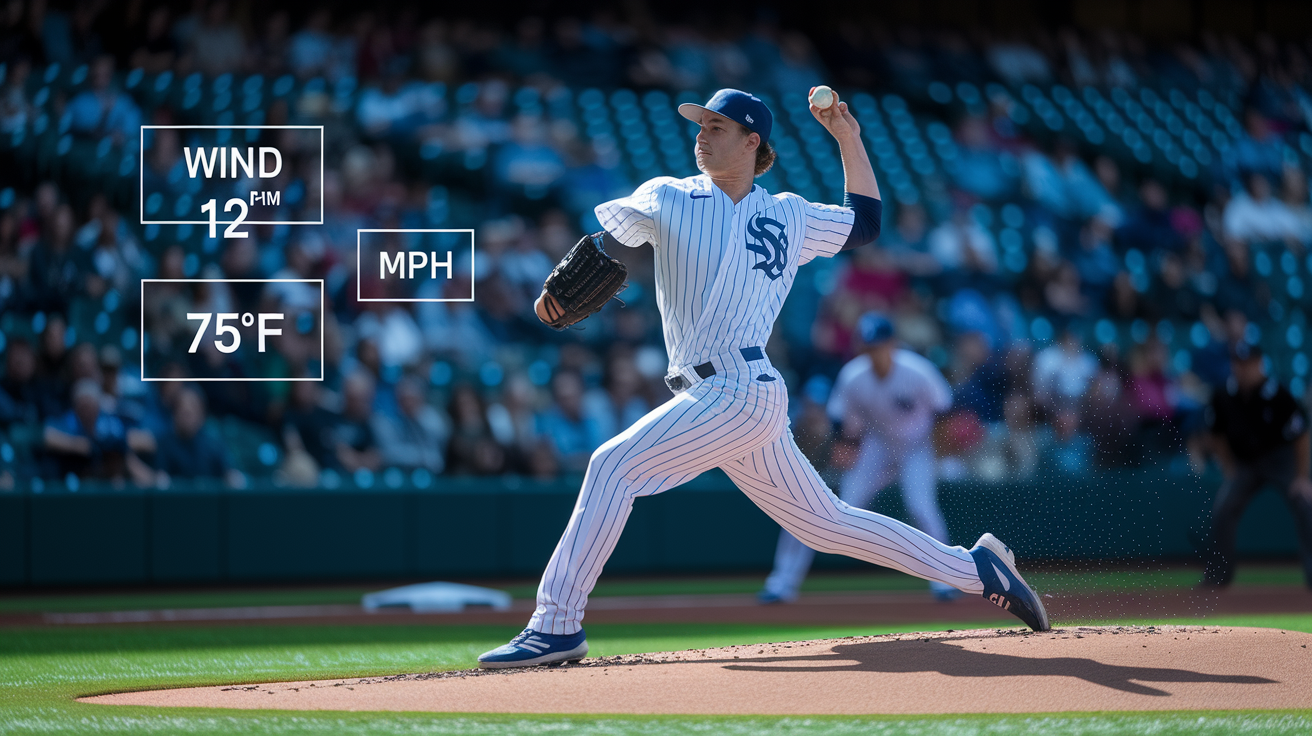
Wind blowing out at 12+ mph and temps over 75°F? That’s trouble for fly-ball pitchers. Starters with FB% above 45% and HR/9 over 1.5 see their home-run rate jump by roughly 0.3 to 0.6 per nine innings. Ground-ball guys with GB% over 55% don’t care nearly as much. They’re the safer play for moneylines and unders when wind direction helps the defense.
Temperature matters more than you think. Every 10°F above 50°F typically adds 0.15 to 0.35 runs per game. Cold games under 50°F suppress scoring by 0.3 to 0.6 runs, especially with wind blowing in at 10+ mph.
Barometric pressure drops can add 0.05 to 0.2 runs through increased carry. Humidity shifts between 40% and 60% create smaller impacts, around 0.05 to 0.20 runs per 10% change. Day games scheduled between 2pm and 6pm local time in warm months produce the biggest run spikes when combined with outfield wind. Track these conditions across rolling 7-day and 30-day windows to spot edges before sportsbooks catch up. Sharp line movement of 0.5 runs or more within four hours of first pitch usually means weather updates have reached the market. Following model-predicted direction when edges exceed 0.35 runs has delivered success rates above 58% historically.
Starter confirmation matters because 12 to 15% of scheduled pitchers get scratched same day. Verify lineups 90 to 120 minutes before first pitch. Parks like Coors Field amplify weather effects by 25 to 40% over league average, while Petco Park suppresses them by 0.5 to 1.0 runs. Wind direction at stadium level matters because crosswinds at 10+ mph can shift HR distribution without dramatically changing total runs.
Key matchups to watch today:
High-FB% starter in 90°F+ conditions with wind out at 15 mph? Favor over and avoid backing pitcher on moneyline.
Ground-ball specialist facing wind-in forecast at 10+ mph and 55°F? Lean under and consider backing that starter.
Park with HR factor above 1.0 hosting two fly-ball pitchers in 75°F+ weather creates a strong over signal when the total hasn’t moved.
Recent velocity drop of 1 to 2 mph for scheduled starter in hitter-friendly weather? Fade that pitcher’s moneyline and team total.
Wind direction flip within three hours pregame means watch for sudden total movement and line-shop across multiple books before acting.
Weather-Adjusted Pitcher Performance Metrics
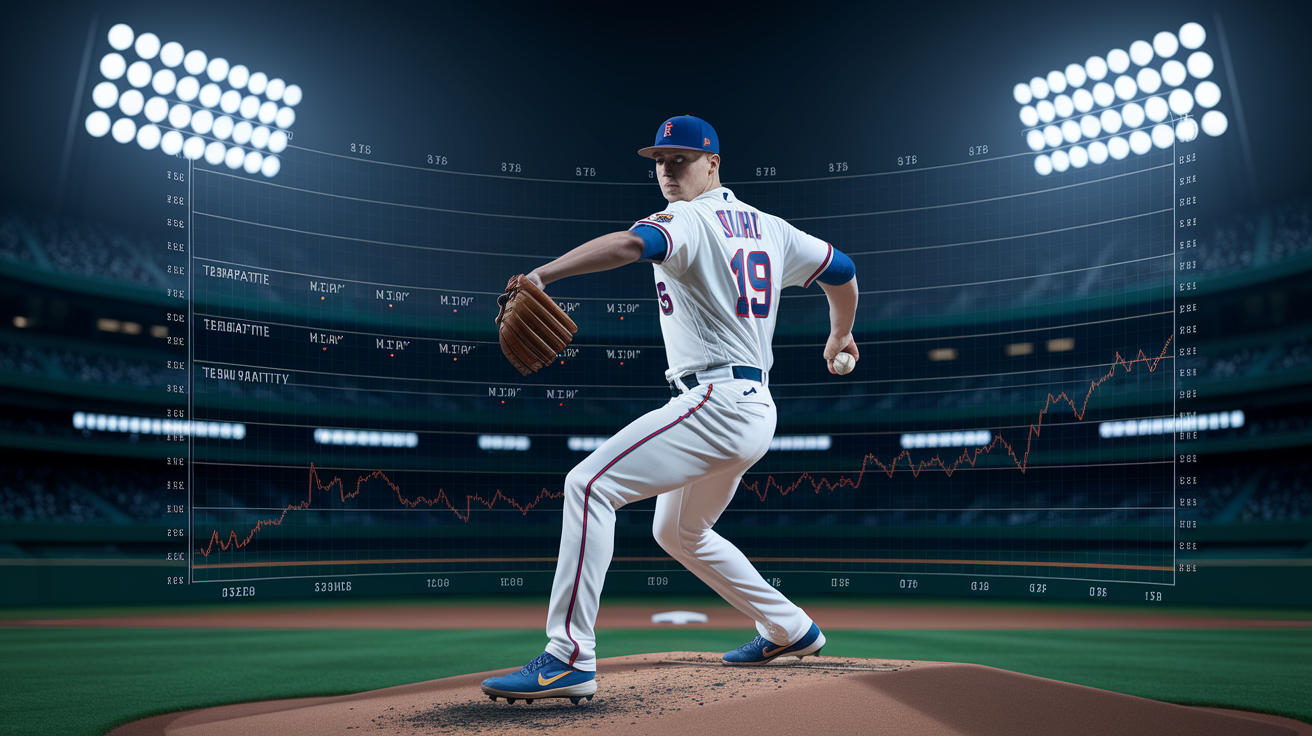
Standard ERA and WHIP can mislead when weather deviates from season norms. Weather-adjusted metrics recalculate expected outcomes by layering temperature buckets, wind speed categories, and humidity ranges over pitcher batted-ball profiles. A fly-ball pitcher with season HR/9 of 1.4 in neutral weather may spike to 1.7 or 2.0 HR/9 when facing 90°F temps and wind blowing out at 12 mph. That same pitcher’s HR/9 can drop to 1.0 or 1.2 in cold, wind-in conditions. Ground-ball pitchers with GB% above 55% show expected run changes under ±0.15 runs across most weather buckets, making them reliable anchors for under plays and moneyline backing when weather favors defense.
Strikeout rates show minimal systematic weather sensitivity. K/9 changes typically stay within ±0.1 across temperature and wind buckets. Evaluating strikeout props? Prioritize pitcher K/BB differential and park strikeout factors over weather forecasts. HR/FB ratio adjustments carry the most predictive weight. Fly-ball starters in the top 30% of FB% can see HR/FB climb by 2 to 4 percentage points in hot, windy conditions, translating directly to higher run totals and weaker moneyline value. Track rolling 30-day xERA alongside same-day weather to spot pitchers whose recent form diverges sharply from their weather-adjusted baseline. A starter showing 0.25 lower HR/9 over the last month paired with wind-in forecast at 8+ mph creates a high-confidence under or favorite-backing opportunity.
Critical weather-adjusted metrics:
Adjusted HR/9: season HR/9 modified by temperature bin and wind category. Use for over/under and moneyline decisions.
Weather-split xERA: expected ERA recalculated per weather bucket. Prioritize last 30-day data for same-day edges.
GB/FB park-weather interaction: combine pitcher batted-ball profile with park HR factor and wind direction for refined run projections.
Recent velocity trends: monitor average fastball velocity over last 15 starts. Drops of 1+ mph reduce homer risk and shift K props.
Ballpark Weather Effects and Run Environment
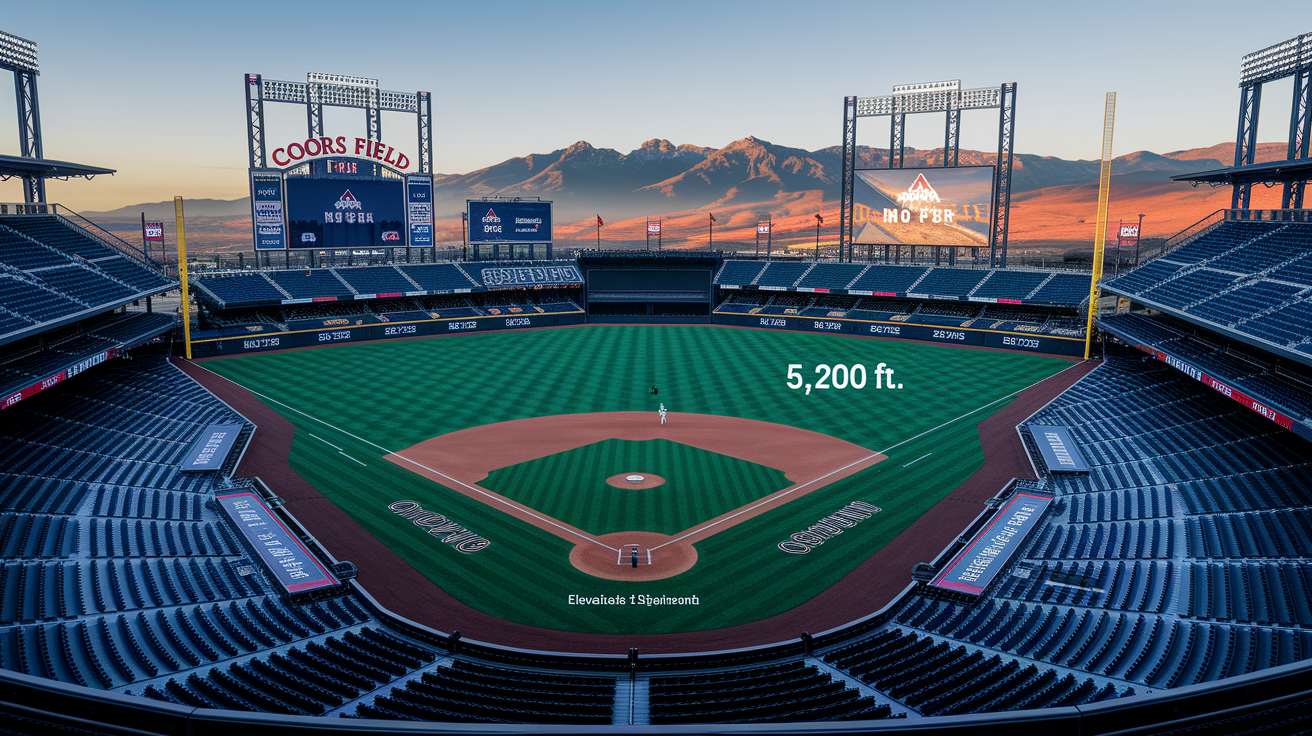
Coors Field elevation at 5,200 feet amplifies carry in every weather condition, pushing season-to-date run environments 25 to 40% above league average. Dry air and low barometric pressure at altitude combine to reduce air resistance. A fly ball that would be a warning-track out at sea level becomes a home run in Denver. Adjust projected totals upward by 1.0 to 1.5 runs on neutral-weather days and 1.5 to 2.0 runs when temperature exceeds 75°F or wind blows out. Wrigley Field wind patterns can swing totals by multiple runs within a single afternoon. Lake-effect winds frequently shift direction between morning forecasts and first pitch. Monitor hourly wind updates for Wrigley and expect sportsbooks to adjust totals by 0.5 to 1.0 runs when sustained wind direction changes are confirmed.
Domed stadiums eliminate direct wind and temperature effects but introduce humidity control variability. Some domes maintain tighter climate ranges, reducing run variance, while others allow humidity to drift. Petco Park in San Diego is pitcher-friendly year-round, typically suppressing totals by 0.5 to 1.0 runs relative to neutral parks even in similar weather. Fenway Park’s Green Monster creates asymmetric HR distributions. Left-handed fly balls gain value while right-handed power is partially neutralized. Wind blowing from right to left at Fenway increases overs modestly, but wind direction into the Monster suppresses left-handed home runs without equally suppressing right-handed power.
Oakland Coliseum and Angel Stadium represent notable exceptions to standard wind-out over trends. Historical data shows that wind blowing out at these parks doesn’t reliably boost scoring, likely due to unique outfield dimensions and marine-layer effects. Remove these stadiums from automated wind-out over plays to improve ROI. Parks with high HR factors above 1.10 paired with hot weather and outfield wind produce the strongest over signals, especially when at least one starter carries FB% in the top quartile.
| Stadium | Key Weather Factor | Typical Impact |
|---|---|---|
| Coors Field | Elevation + dry air | +1.0–2.0 runs vs neutral park |
| Wrigley Field | Lake-effect wind shifts | ±0.5–1.5 runs per direction change |
| Petco Park | Marine layer + dimensions | -0.5–1.0 runs; pitcher-friendly |
| Fenway Park | Wind direction vs Green Monster | Asymmetric HR; wind left favors LHH |
| Oakland Coliseum | Marine layer + foul territory | Wind-out does not boost overs reliably |
Historical Weather Correlations with Betting Outcomes

Games with wind blowing out at 10+ mph have historically increased over success rates by 4 to 8 percentage points compared to neutral-wind contests. When temperature climbs above 75°F and wind blows out at 12+ mph, the over win rate approaches 55 to 60% in samples exceeding 900 games. Wind blowing into the park at 10+ mph suppresses home runs by roughly 10 to 20% relative to season averages and drives under results at 57% in tested samples of approximately 1,200 games. The 15-year tracking window referenced in multiple datasets shows that wind-in unders produced winning results in all but one recorded instance. That’s a consistency edge you don’t find often.
Cold-temperature games below 50°F reduce slugging percentages and combined run totals by 0.3 to 0.6 runs on average. Pair cold weather with ground-ball pitchers and wind blowing in to maximize under edges. Humidity correlations are smaller but measurable. Higher humidity combined with warmer air increases ball carry slightly, adding 0.05 to 0.15 runs per game in high-humidity, high-temperature conditions. Barometric pressure drops, often preceding storms, correlate with modest increases in fly-ball distance, contributing an additional 0.05 to 0.2 runs.
Day games scheduled during warm months and starting between 2pm and 6pm local time show run spikes of 0.1 to 0.3 runs compared to evening starts. This effect compounds when combined with outfield wind and temps above 70°F. Backtests of combined weather rules, such as hot plus wind-out plus fly-ball-heavy starters, deliver ROI per bet of roughly +4.2% after standard vigorish, with hit rates near 56% across samples of 900+ games. Cold plus wind-in plus ground-ball starters produced +3.5% ROI and 57% hit rates in samples of 1,200 games.
Weather Influence on Line Movement

Sportsbooks react to weather updates at different speeds, creating brief windows of opportunity for bettors who monitor forecasts hourly. Totals often move 0.5 to 1.0 runs within four hours of first pitch when wind forecasts shift from calm to sustained 10+ mph or when temperature projections jump by 10°F or more. Books that adjust early protect their exposure, while slower operators leave stale lines available for 30 to 90 minutes. Line-shopping across three or more sportsbooks captures these discrepancies. Grabbing an unadjusted total of 8.5 when sharper books have moved to 9.0 translates directly to expected value.
Sharp bettors focus on barometric pressure indicators and humidity shifts that casual bettors overlook. When low-pressure systems approach game sites, professionals often push overs before public betting follows. Moneyline movement of 40 to 100 cents or implied probability shifts of 10 to 20% within 24 hours frequently signal that smart money has reacted to weather-driven starter vulnerabilities. Confirm these moves align with model-predicted weather adjustments before tailing. Public betting splits above 65% on one side paired with line movement in the opposite direction indicate that sharp action is fading the public. Cross-reference with weather data to identify which side holds the true edge.
Handle patterns reveal public tendencies to overreact to afternoon high-temperature forecasts. Books shade totals up by 0.5 runs when the public hammers overs in day games, creating contrarian under opportunities when wind direction reverses pregame or when forecasts moderate. Sudden total changes of ±0.5 runs after weather updates show 58%+ success rates when the model-predicted direction aligns and the edge exceeds 0.35 runs. Tracking these movements in real time allows you to enter positions before the full market adjusts.
Common market reactions to weather updates:
Wind forecast shift: totals move 0.5 to 1.0 runs. Books adjust faster for wind-out than wind-in.
Temperature spike or drop: moneyline and totals both shift. Favorites gain value in pitcher-friendly cold, underdogs gain in hitter-friendly heat.
Late-breaking humidity or pressure change: subtle total adjustments of 0.5 runs. Sharp money reacts before public notices.
Recommended Weather-Based MLB Bets for Today
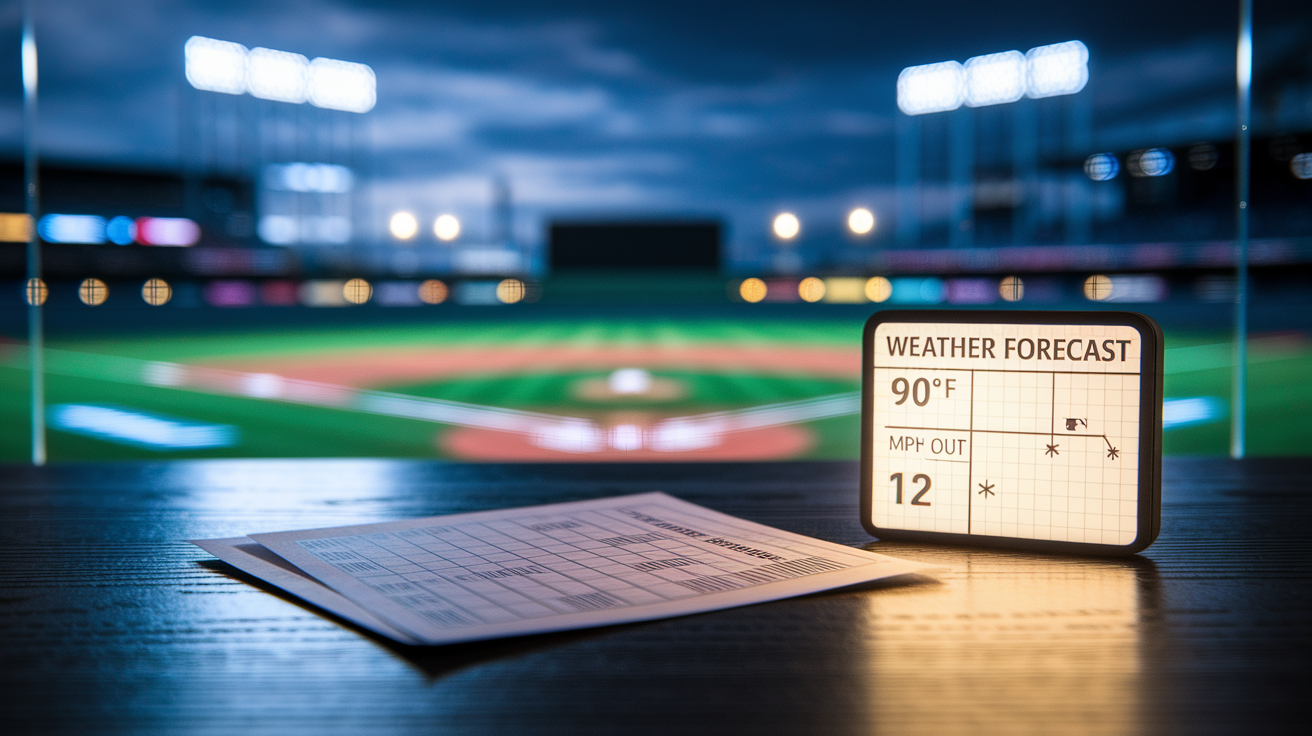
Identify fly-ball pitchers scheduled in conditions forecast at 90°F or higher with wind blowing out at 12+ mph. Starters carrying FB% above 48% and HR/9 above 1.8 in parks with HR factors at 1.1 or higher create strong over signals, especially when at least one major sportsbook hasn’t yet adjusted the total. Line-shop for books offering totals 0.5 runs below the consensus and bet overs when your model edge exceeds 0.5 runs. Avoid backing these pitchers on the moneyline unless offered at prices of +120 or better, as weather-driven homer vulnerability erodes favorite value.
Ground-ball specialists facing wind blowing into the park at sustained 10+ mph and temps below 60°F offer high-confidence under plays. Look for starters with GB% at or above 55% and recent 30-day HR/9 suppressed by 0.25 or more relative to season norms. Pair these conditions with low public betting percentages on the under to capitalize on contrarian spots. When both starters in a matchup qualify as ground-ball pitchers and weather forecasts confirm wind-in and cool temps, historical win rates on unders approach 57% with average edges near 0.5 runs.
Recommended bets tied to pitcher performance and weather conditions:
Over 8.5 in matchup featuring starter with FB% 46%, HR/9 1.9, playing in 92°F weather with 14 mph wind blowing out. Park HR factor 1.15. Line unadjusted at one major book.
Under 7.5 in game with both starters GB% above 52%, wind blowing in at 11 mph, temperature 54°F. Public betting 68% on over. Model edge 0.6 runs favoring under.
Moneyline favorite backing ground-ball starter with recent velocity stable, facing wind-in at 9 mph and temp 58°F. Opponent starter FB% 49% and recent HR/9 up 0.3 vs season. Model win probability 5.5% higher than market implied.
First-five-innings under 4.0 when both starters show xERA below 3.50 last 30 days, wind blowing in at 12 mph, and temperature 51°F. Park factor neutral. Sharp line movement of 0.5 runs toward under confirms model direction.
Final Words
Wind’s picking up at the ballpark and lines are already twitching. You learned which starters hold up in cool, heavy air and which fly-ball pitchers get exposed when winds blow out.
We went through weather-adjusted ERA and HR/FB, park-specific effects, historical correlations, and how markets move on forecast changes. Use the matchup checklist and metrics to shape wagers—mlb daily betting trends pitchers and weather impact should be part of your routine, and that edge can pay off this season.
FAQ
Q: How does weather affect pitchers?
A: The weather affects pitchers by changing ball carry and grip: warm, dry air and wind blowing out boost fly balls and homers, while cold, humid air, rain, or crosswinds reduce carry and can hurt command.
Q: How bad does the weather have to be to cancel a baseball game?
A: The weather has to make play unsafe or unplayable for umpires to cancel a game: persistent heavy rain causing standing water, lightning, or extreme winds. There’s no fixed measurement; officials decide.
Q: What is the best stat to bet on in baseball?
A: The best stat to bet on in baseball is pitcher strikeout rate (K/9 or K%). It’s the most consistent for props; for totals also weigh HR/FB and park-plus-weather run rates.
Q: Do baseball games score more with rain or less?
A: Baseball games generally score less with rain because soggy air and slower ball carry reduce homers and extra-base hits. Light drizzle can have mixed effects, but overall runs tend to fall.