


Box scores lie — game recaps tell you who’s actually valuable for fantasy this week.
They show minutes, usage spikes, coach quotes, and injury timelines you won’t see in raw stats.
In short: recaps give the why behind the numbers.
Read on and you’ll get clear roster actions: who to add now, who to stream for the week, and who to bench or sell.
I’ll give simple thresholds (minutes, usage, roster %), must-hit waiver targets, and FAAB guideposts so you can act fast and win your week.
Immediate Fantasy Takeaways From Recent NBA Game Recaps

Game recaps give you the clearest picture of what’s actually changing on rosters. You’re not just looking at points and rebounds. You’re tracking minutes, usage, injury updates, and which coach just decided to rotate his bench differently. The stuff that matters hides right there in plain sight: a guy getting 25 minutes with 15 points or 10 boards who’s sitting on waivers in more than half your league? Add him now. Box scores show the what. Recaps show the why, and whether you can count on it next week.
When a starter goes down, someone steps up. That’s the replacement player rule, and it works. Backups absorb 8 to 14 extra minutes and give you 3 to 7 more fantasy points per game in points formats. Category leagues see the same bump in boards, assists, or blocks. Move fast. You’ve got 24 to 48 hours after the injury report drops before someone else grabs him.
But don’t rush to commit long term. Only promote a fill-in to your starting lineup for the season if he’s projected for 28 minutes or more and at least 18 percent usage across the next seven games. Anything under that? Stream him for 3 to 14 days, then move on. Check Game Recaps every night for updated box scores, injury notes, and postgame quotes that tell you if your add was smart or if you need to pivot.
Six things to watch for in nightly recaps:
- Minutes threshold: Grab anyone playing 25+ minutes who’s rostered in 50 percent of leagues or less, especially if he’s putting up double digits in scoring or rebounding.
- Usage spike: Look for guys whose usage jumps 6 percentage points or more across three straight games. That translates to 3 to 6 added fantasy points per contest.
- Injury replacement: Go after players gaining 8 to 14 minutes because a starter’s out. Check the injury timeline so you know how long to hold.
- Matchup exploitation: Stream guys facing teams that allow 40+ fantasy points to their position over the last 10 games, or teams in the bottom quartile for defensive rebounding.
- Roster percentage filter: Focus on players rostered in 30 percent of leagues or less who logged 20+ minutes last game or two 15-minute appearances in the last three.
- Start/sit clarity: Bench anyone under 20 minutes for three straight or usage at 8 percent or lower for three games. Start guys with 28+ minutes and 18+ percent usage.
Standout Fantasy Performances And What They Mean For Your Roster
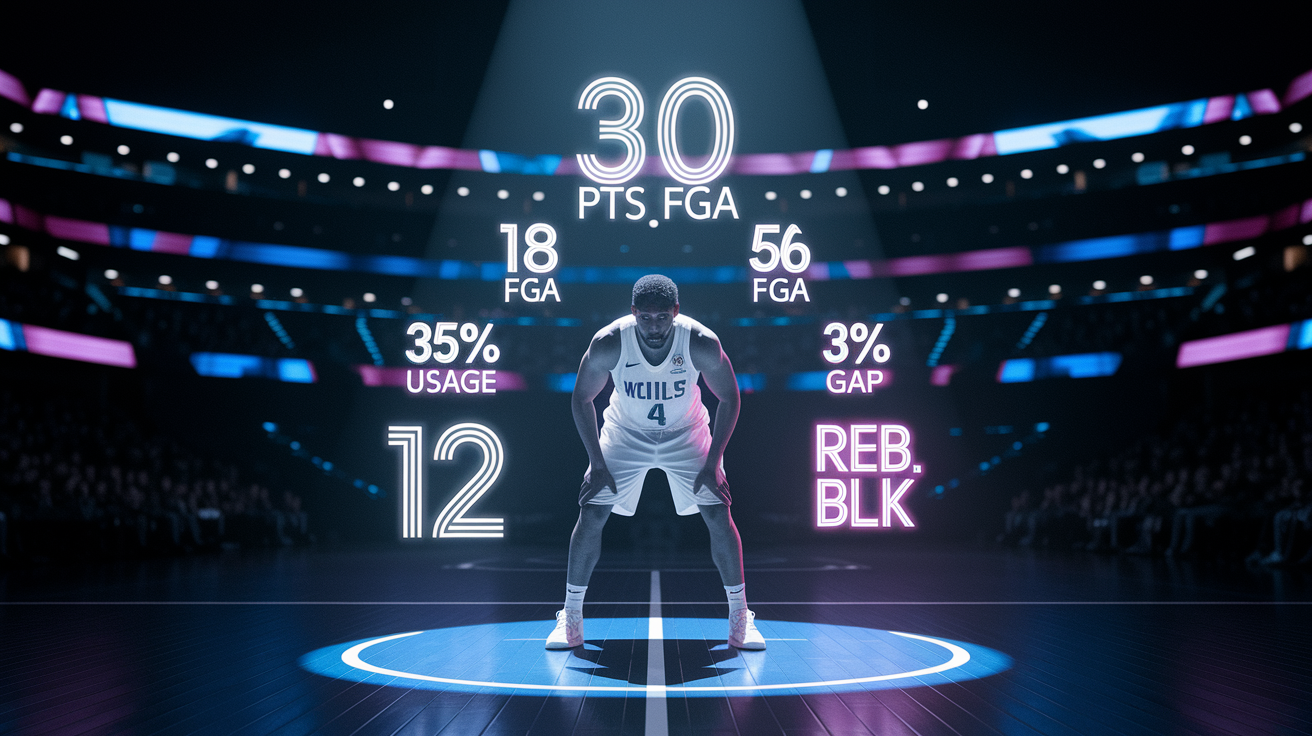
A single monster game tells you to pay attention. When someone drops 30 points on 18 or more shots, pairs it with 8+ free throw attempts and 35 percent usage, that’s not random. That’s role expansion or a matchup advantage you can ride for the next few games. Same with a 12-board, 2-block night in 28+ minutes. Category leagues love that, especially if the rotation’s thin because of injuries.
Multi-category lines are where you find real value. A 20-point, 8-rebound, 6-assist game in one night? Add immediately in roto and category formats, then hold for two weeks minimum unless the minutes disappear. The trick is separating real breakouts from flukes. Track three-game trends: players posting 8+ extra minutes per game and a 6-point usage jump across three straight contests usually keep producing. One-off spikes? Usually someone else got in foul trouble or the game turned into garbage time early.
| Player Type | Threshold Hit | Fantasy Action |
|---|---|---|
| High-volume scorer | 30+ PTS, 18+ FGA, 35%+ usage | Upgrade to weekly starter; watch free throw rate to see if efficiency holds |
| Rebounding specialist | 12+ REB, 2+ BLK, 28+ minutes | Add for boards/blocks leagues; make sure rotation injuries stick around |
| Multi-category contributor | 20+ PTS, 8+ REB, 6+ AST | Immediate add for roto formats; hold at least 2 weeks unless minutes crash |
| Playmaking guard | 10+ AST, 4+ 3PM, 28+ minutes | Prioritize in assists/threes categories; check back-to-back usage consistency |
| Defensive wing | 2+ STL, 1.5+ BLK per 36 minutes, 26+ mpg | Stream for defensive categories; works great in punt-points builds |
Injury Fallout And Minutes Redistribution After Game Recaps
The injury timeline decides everything. Short absences of one to three days split 40 to 60 percent of the injured player’s minutes across a couple guys, usually bench wings and backup bigs who’ve started before. Mid-term injuries of one to two weeks push that to 60 to 80 percent, creating solid adds if the replacement logged 20+ minutes recently. Long-term or season-ending injuries? Those create permanent changes. Players getting consecutive 25-minute nights with 15 percent usage or higher become must-adds everywhere.
Not all replacements are equal. A backup point guard stepping in for an injured starter absorbs way more usage and playmaking than a wing sliding into a committee rotation. Check recent game logs to see if the replacement has handled similar minutes this season. Players who’ve already started adapt faster than bench pieces getting thrown into new roles. And schedule density counts: replacements on teams playing four games in the next seven days give you more total fantasy value than guys on light schedules, even if their per-game numbers look the same.
You’ve got 24 to 48 hours to evaluate injury replacements after the first report. Recaps the morning after an injury usually include coach quotes about rotation plans and timelines. Late-breaking news right before tip-off creates the best waiver chances because fewer managers can react in time. Check updates at both the 24-hour and 4-hour windows before game time. Initial designations shift minutes projections, but gameday confirmations and warm-up reports either lock it in or flip everything.
Five steps to work through injury fallout from recaps:
- Classify the timeline: Figure out if it’s 1 to 3 days (day-to-day), 1 to 2 weeks, or 3+ weeks/season-ending based on team updates and beat reporter intel.
- Identify the direct replacement: Find the player who started or logged the most minutes at that position during past absences this season.
- Quantify minutes and usage transfer: Expect 8 to 14 extra minutes for the replacement. Multiply their per-minute production by the new expected total to project fantasy points.
- Check opponent pace and schedule: Go after replacements on faster-paced teams (more possessions) with denser schedules (more games in the next 7 to 14 days).
- Verify roster percentage: Only use a roster slot or FAAB if the replacement is rostered in 30 percent of leagues or fewer and projects 20+ minutes across at least three games.
Rotation Trends And Usage Shifts Identified In Recent Recaps

Real breakouts come with sustained minutes and usage increases. Players getting an 8-minute-per-game bump and a 6-point usage rise across three straight contests usually deliver 3 to 6 more fantasy points per game in points formats, or solid category gains in roto. These trends don’t happen randomly. They follow injuries, trades, or coaching changes that open real opportunity. Cross-reference recap notes with injury reports and depth chart updates to confirm the cause.
Red flags show up just as clearly. A minutes drop of 10+ per game across two straight contests, or usage falling 6 percentage points over three games, signals trouble even when the box score still looks okay. When coaches start talking about “coverage,” “matchup adjustments,” or “schedule management” in postgame comments, expect the role to shrink further. Sell or bench these guys before their trade value bottoms out.
How To Identify Sustainable Versus Temporary Role Changes
Multi-game samples separate the real from the noise. A player gaining minutes for one game because a teammate picked up foul trouble or the opponent played at a crazy pace will probably revert when things normalize. Sustainable changes hold up across different opponents and game scripts, and often come with explicit coach endorsements in postgame quotes like “earned more minutes” or “part of the rotation moving forward.” Check minute trends against upcoming schedules. If a player’s usage spiked against bottom-tier defenses but the next five opponents rank top 10 defensively, treat it as a sell-high window instead of a long-term upgrade.
Waiver Wire Targets And Streaming Options Based On Game Recap Data

Add candidates need to clear specific bars to justify a roster spot. Target players rostered in 30 percent of leagues or less who logged 20+ minutes in their most recent game, or who posted two 15-minute appearances in the last three contests. One-game spikes don’t mean much compared to consistent opportunity. Go after players with clear roles and dense schedules. Streamers deliver the most value when they’ve got two or more games scheduled in the next seven days, multiplying their total fantasy output even if per-game production is modest.
FAAB spending depends on how long the opportunity lasts. Drop 10 to 20 percent of your budget on short-term streams projected to start three to seven games while a teammate recovers from a minor injury. Commit 25 to 50 percent for players stepping into multi-week starting roles because of significant injuries or permanent rotation changes. Conservative bids work for one-off matchup plays. Aggressive spending locks down long-term assets before your league catches on.
Ownership percentages guide priority calls. Immediate pickups should focus on players rostered in 40 percent of leagues or less who meet the minute and usage thresholds above. Skip adds for players rostered in 70 percent or more unless they clear multi-category thresholds. Those guys are already widely held, and their upside is baked into rankings. The gap between 30 and 50 percent rostered is where you find the best value. Casual managers haven’t noticed the role change yet, but you still can.
Seven high-priority waiver add signals from recent recaps:
- Player rostered in 30 percent or less with 20+ minutes last game and projected 20+ minutes across next three contests.
- Replacement for injured starter showing 25+ minutes in consecutive games and 15%+ usage rate.
- Multi-category contributor posting lines like 12+ PTS / 8+ REB / 2+ STL or BLK in 28+ minutes.
- Streamer with 2+ games in next seven days facing opponents allowing 40+ fantasy points to his position.
- Young backup given 20 to 30 minutes in two straight games, with beat reporters confirming expanded role.
- Player with at least 0.45 fantasy points per minute average expected to play 20+ minutes per game moving forward (points leagues).
- Bench wing or big gaining 8 to 14 minutes due to starter injury, on a team with four games in the next week.
Start/Sit Decisions Driven By Recent NBA Game Recaps

Start candidates earn lineup spots through stable minutes and usage. Players logging 28+ minutes with 18 percent or higher usage across their last three games deserve weekly starting consideration in most formats. Those numbers mean offensive involvement and floor time enough to produce consistent value, even if single-game variance creates the occasional dud. Pair minute trends with upcoming matchups. Starting a player with locked-in minutes against a bottom 10 defense amplifies upside.
Sit candidates reveal themselves through shrinking opportunity. Bench players whose minutes fall under 20 for three or more straight games, or whose usage drops to 8 percent or lower, lose fantasy relevance even if they produced well before. Matchup context can override this temporarily. Streaming a low-minute player against an opponent allowing 40+ fantasy points to his position over the last 10 games creates short-term value. But never commit long-term roster capital to fading roles.
Four criteria for confident start/sit calls from recent recaps:
- Minutes floor: Start players with 28+ minutes across the last three games. Sit players under 20 minutes for three straight unless you’re streaming for a specific matchup.
- Usage consistency: Start players holding 18%+ usage. Sit those dropping below 8% usage for three games, which signals reduced offensive involvement.
- Opponent weakness: Start players facing teams allowing 40+ fantasy points to their position over the last 10 games, or opponents ranked bottom five in pace or defensive efficiency.
- Schedule density: Start players with back-to-backs or four games in seven if their minutes are stable. Sit players on light schedules (two games or fewer in the next week) unless they’re elite per-game producers.
Rest, Back-To-Back Scheduling, And Load Management Fantasy Effects

Stars playing back-to-backs face higher DNP-Rest risk or minutes cuts of 6 to 10 per game. Teams managing playoff seeding or preserving veteran health routinely sit key players on the second night, especially late in the season. Check injury reports at the 24-hour window before tip-off, then recheck at the 4-hour mark. Initial designations shift as medical staff evaluate player readiness and coaches finalize rotations. The gap between probable and out can wreck your starting lineup if you don’t refresh close to lock time.
Late-season rest volatility boosts bench depth value by 20 to 35 percent. Role players who rarely miss games become more valuable as stars sit strategically, because they offer consistent minutes and usage even if their per-game ceilings are lower. Stash one or two high-floor backups during playoff weeks to protect your roster from last-minute rest announcements. Winning a weekly matchup often comes down to having active players in every lineup slot, not fielding the highest-upside stars who might sit unexpectedly.
Rest-Of-Season (ROS) Fantasy Shifts Triggered By Recap Trends

ROS upgrades need sustained proof across multiple games. Promote a player’s rest-of-season outlook when he posts seven or more consecutive games with 28+ minutes and 18 percent or higher usage. That sample confirms the role change is structural, not matchup-driven or temporary injury replacement. Downgrade players whose minutes fall below 20 for five straight games, or whose coaches publicly mention reduced roles or “coverage” adjustments in postgame quotes.
Buy-low chances pop up when recent performance diverges from season-long averages. Target players with season averages of 12 points, 4 assists, or 4 rebounds per game whose recent three-game usage has dropped 30 percent or more below their norm. Offer an overperforming streamer or a player with shaky minutes in exchange. You’re capitalizing on the gap between short-term perception and long-term projection. Sell-high windows open when players spike 50 percent above season averages across three to five games, especially if the spike happened against bottom-five defenses or in high-pace matchups that won’t repeat.
Trade value shifts faster than consensus rankings. A player logging one 30-point game with minutes 10 above his season average, followed by an easier upcoming schedule, creates a narrow sell-high window before his production normalizes. Move him for a more stable asset before the market corrects. Playoff-bound managers should prioritize multi-category contributors with secure roles over volatile high-ceiling streamers. Consistency wins tight weekly matchups more reliably than boom-or-bust upside.
| Criteria | Buy-Low Signal | Sell-High Signal |
|---|---|---|
| Recent trend | Usage under 50% of season norm for 3 games; minutes at 28 or more maintained | 3 to 5 game spike 50% or more above season averages in scoring or efficiency |
| Opponent context | Faced top 5 defenses; underlying shooting metrics (TS%) down 5+ points temporarily | Spike occurred vs bottom 5 defenses or in high-pace outlier games |
| Minutes stability | Consistent 28+ minutes despite poor box scores; role unchanged per coach quotes | Minutes 10 above season average in spike games; unlikely to repeat |
| Usage floor | Season usage at 20% or higher; recent dip appears matchup or schedule-driven | Usage variance over 8% game-to-game; inconsistent offensive involvement |
| Action window | 1 to 3 days after poor performance; before correction in consensus rankings | Immediately after 2 to 3 game hot streak; before schedule toughens |
Final Words
In the action, last night’s recaps delivered clear signals: minutes bumps, usage spikes, and injury-driven role changes that shift fantasy value immediately.
Use those triggers to stream, add, or bench players, and target 25+ minutes, clear usage jumps, and low rostered percentage before pulling the wire.
Check coach comments and 2-3 game trends for sustainability. These fantasy implications from recent nba game recaps should help you set smarter lineups and chase wins.
FAQ
Q: How should I read recent game recaps for fantasy takeaways?
A: Reading recent game recaps helps you spot changes in minutes, usage, injuries, coach cues and box-score spikes — the core signals for adds, drops, and start/sit moves tonight and next game.
Q: What numeric triggers indicate I should add a player?
A: Numeric triggers for adds are ≥25 minutes plus ≥15 points or ≥10 rebounds or ≥7 assists, especially if the player is rostered in ≤50% of leagues and showing role consistency.
Q: When is a standout performance sustainable for fantasy?
A: A standout is sustainable when it repeats across three games with +8 minutes per game and a +6% usage jump; otherwise treat it as a short-term spike and consider a two-week hold at most.
Q: How do injuries from recaps affect minutes redistribution?
A: Injury-driven minutes shift by bucket: 1–3 days causes 40–60% redistribution, 1–2 weeks 60–80%, and 3+ weeks often creates permanent adds if replacements hit ≥25 minutes and meaningful usage.
Q: Who should I target on the waiver wire after reviewing recaps?
A: Waiver targets are players rostered ≤30% who logged ≥20 minutes last game or two recent 15-minute games, ideally with favorable upcoming schedules and coach mentions hinting at role growth.
Q: What immediate start/sit rules should I use from game recaps?
A: Start players with ≥28 minutes and ≥18% usage over the past three games; sit players whose minutes dropped below 20 for three-plus games or whose usage is ≤8% consistently.
Q: How do I identify sustainable versus temporary role changes?
A: Identifying sustainability means watching multi-game trends (≥8 mpg and ≥6% usage across three games), matching that to coach quotes and lineup repeats before committing long-term on roster moves.
Q: How should I manage back-to-back and rest concerns from recaps?
A: Managing rest: expect DNP-Rest or 6–10 mpg drops on back-to-backs for stars; check 24- and 4-hour reports and prioritize bench depth, especially late in the season when rest volatility rises.
Q: When should I buy-low or sell-high based on recap trends?
A: Buy-low when a player’s season averages are solid (≈12/4/4) but recent usage is under 50% of norm; sell-high on 3–5 game spikes that are ≥50% above season averages and likely matchup-driven.
Q: What is the minute replacement rule after a starter injury?
A: The minute replacement rule says injured starter replacements typically gain +8 to +14 minutes and about +3 to +7 fantasy points; evaluate their first 24–48 hours for sustained opportunity.
Q: What ROS commitment thresholds should I use from recap data?
A: Commit for rest-of-season when a player posts ≥28 minutes and ≥18% usage for seven-plus games; downgrade if minutes stay below 20 for five games or coach signals role reduction.
Q: Where should I pull nightly recap data for quick fantasy checks?
A: Pull nightly recap data from Game Recaps, which centralizes minutes, usage, injuries, coach quotes and box-score spikes for fast, actionable fantasy reads.